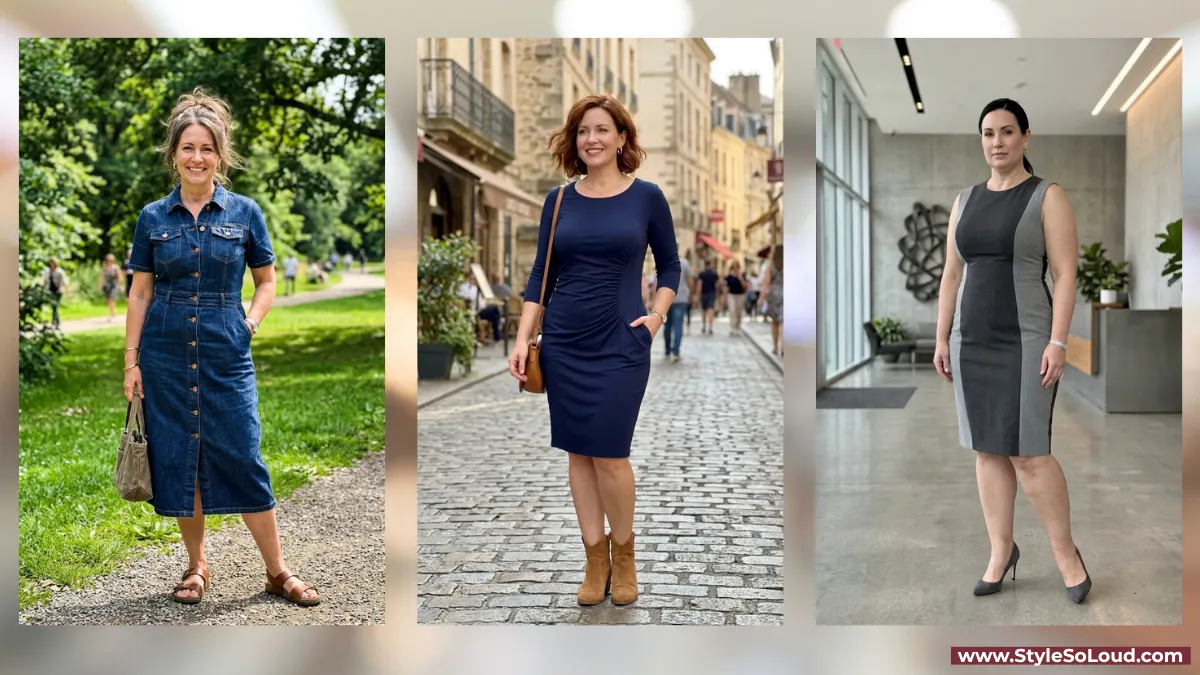
Finding a dress that actually flatters your midsection can feel like a frustrating chore. Most fashion advice tells women over 40 to just wear shapewear and call it a day. That is exhausting and often uncomfortable. You want to feel confident, breathe easily, and sit down at dinner without adjusting your hemline every five minutes.
The real trick is not about squeezing yourself into restrictive garments. It is about understanding how fabric drapes and where seams sit. A tiny shift in waistline placement or fabric weight changes everything.
If you are looking for dresses that hide lower belly 2026 trends offer some incredibly smart, structured silhouettes. We are stepping away from thin, clingy materials and moving toward cuts that naturally skim over the body. Here is a practical look at exactly what styles to shop for, how they work, and what details to avoid.
1. Opt For An Empire Waist Just Below The Bust
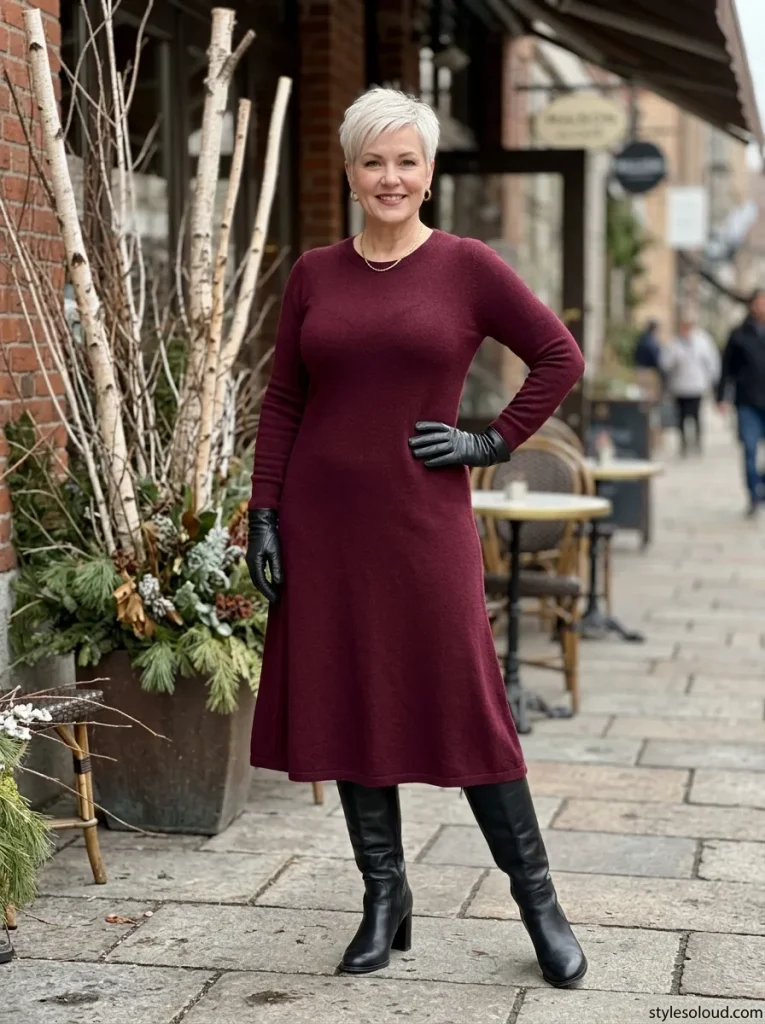
Start by finding your natural narrowest point. For most women, this sits right under the bust rather than at the traditional waist.
Empire waist dresses capitalize on this exact spot. The seam gently hugs the ribs and then flows outward, completely bypassing the lower stomach area. You get shape and definition without any fabric grabbing where you do not want it.
Keep these details in mind when shopping:
- Ensure the seam hits bone, not soft tissue.
- Look for a relaxed skirt, not a tight pencil bottom.
A standard waist seam that digs into the stomach and highlights the lower belly when you sit down.
An empire seam resting gently on the ribs, allowing the fabric to skim beautifully over the midsection.
2. Tie Wrap Dresses On The Side, Never The Center
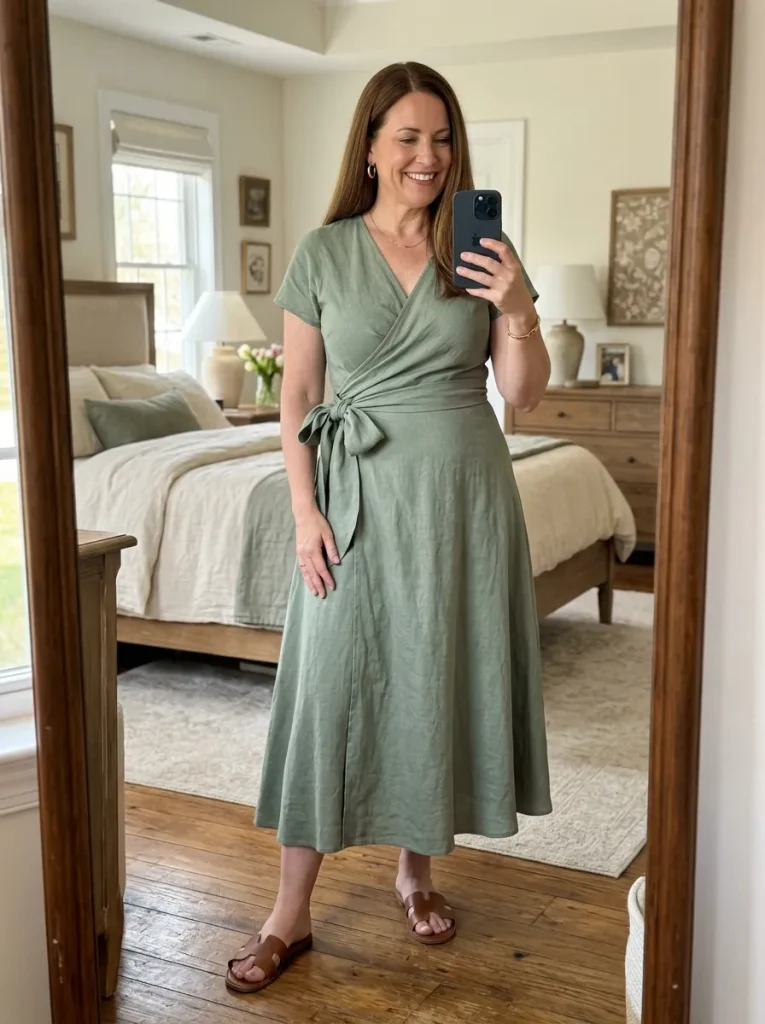
A lot of women tie their wrap dresses right over their belly button. That creates a bulky knot exactly where you want a smooth line.
Moving the tie to the left or right side instantly fixes the problem. Just follow this quick check when getting dressed:
- Pull the fabric firmly diagonally across the stomach.
- Secure the knot sitting on your hip bone, not the center.
This creates a soft drape over the stomach and draws the eye to your natural curves. It takes two seconds but completely changes how the garment fits.
💡 Quick Tip
Pin the neckline of a wrap dress from the inside with a tiny safety pin so you can sit and move without the fabric shifting across your waist.
3. Look For Strategic Ruching Across The Midsection
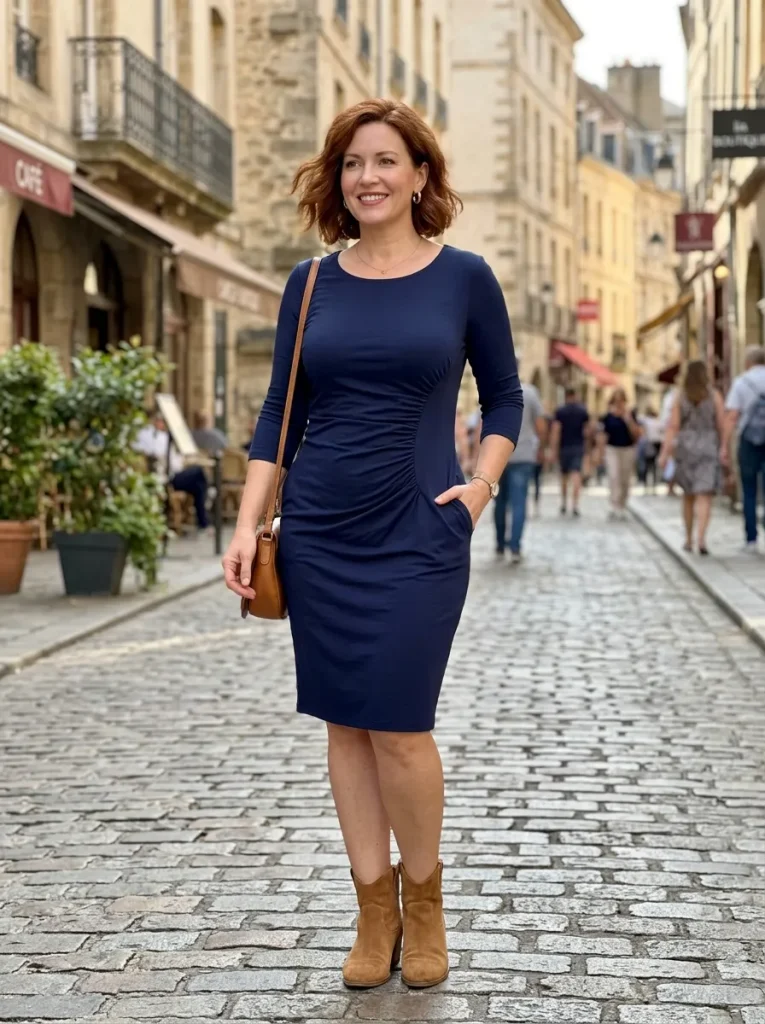
Flat, tight fabric stretching across the stomach acts like a magnifying glass. Every bump shows.
Ruching solves this by building texture directly into the dress. Gathered fabric creates folds and shadows that act as a visual camouflage. The eye sees the intentional folds of the dress instead of the shape underneath.
Stick to these gathering styles:
- Side seam ruching.
- Asymmetrical draping.
Choose diagonal ruching pulling from the side seam.
Look for soft, asymmetric gathers.
Avoid horizontal elastic gathering straight across the stomach.
Skip flimsy, shiny fabrics that reflect light on bumps.
4. Pick A-Line Shapes In Stiff, Forgiving Fabrics
Notice how an A-line skirt stands away from the body. It is the most reliable silhouette in your closet.
The fabric matters just as much as the cut. A thin jersey A-line will still cling to static and sweat. Try thicker materials to get a crisp tent effect over the lower belly:
- Crisp cotton poplin.
- Structured raw denim.
- Medium weight linen.
A thicker material holds its own structure. It gives you room to move and breathe without the dress collapsing against your skin.
| Stiff Fabrics | Clingy Fabrics |
|---|---|
| Cotton poplin, heavy linen, structured denim. | Modal, thin rayon jersey, silk satin. |
| Holds a crisp shape away from the skin. | Drapes heavily and reveals every contour underneath. |
5. Use Dark Color Blocking Down The Torso
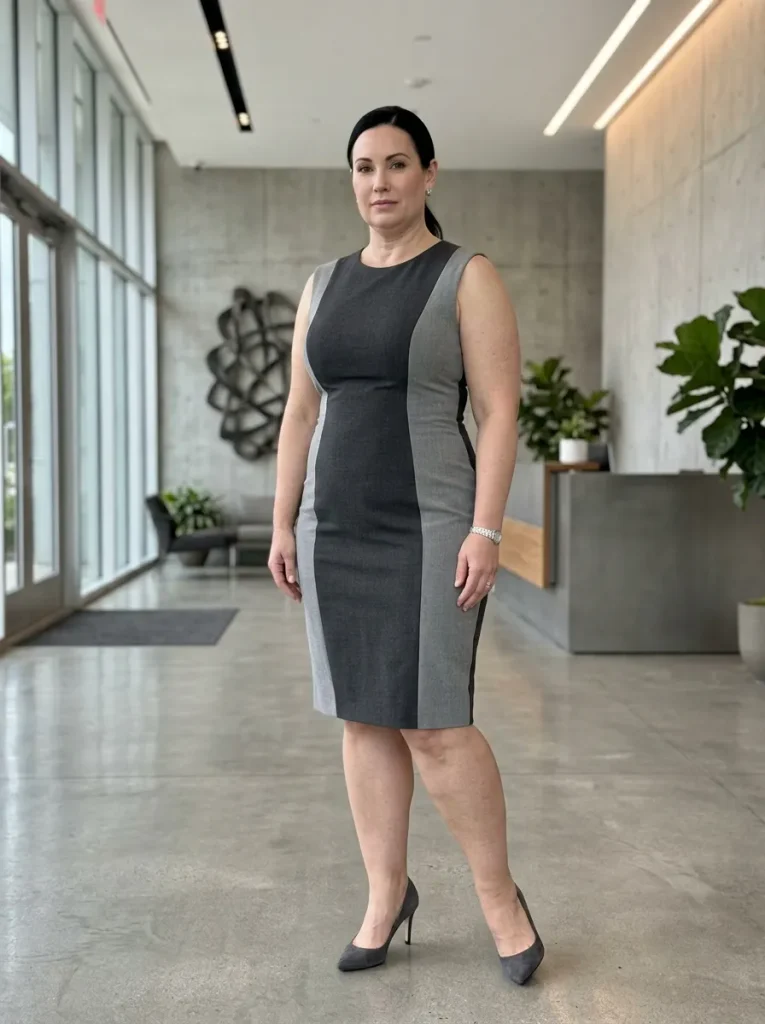
Dark colors recede and light colors advance. You can use this basic art rule to your advantage.
Dresses with dark panels down the center and lighter colors on the sides trick the eye. Or try the reverse with dark sides and a lighter front. Both methods create a strong vertical line.
This visual trick breaks up the width of the torso. It makes the stomach area fade into the background while giving the illusion of a longer, leaner frame.
6. Draw The Eye Up With A Deep V-Neck
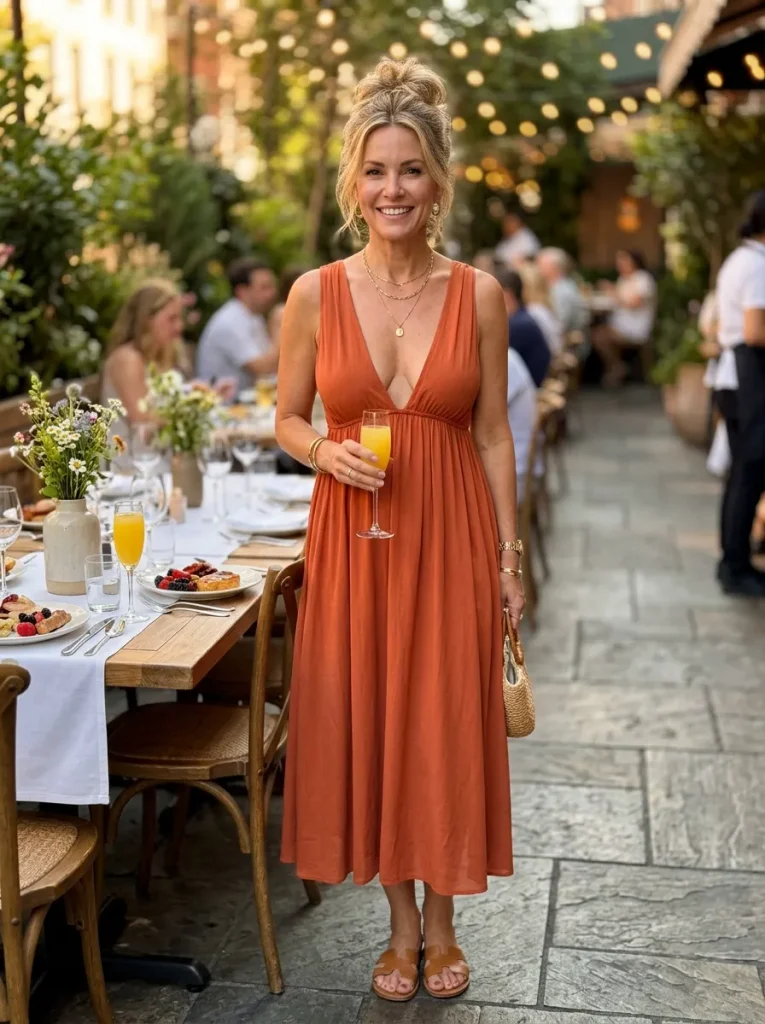
If you want people to stop looking at your stomach, give them somewhere else to look.
A deep V-neck creates a sharp, plunging line that points straight down toward the waist, but the eye naturally travels up that line to the face. It opens the chest and elongates the neck.
To make this work without feeling overexposed, try this sequence:
Find a V-neck that ends just above the cleavage line.
Layer a delicate, layered necklace to fill the space.
Balance the open top with a slightly longer hem, like a midi skirt.
7. Choose Peplums That Flare From Your True Waist
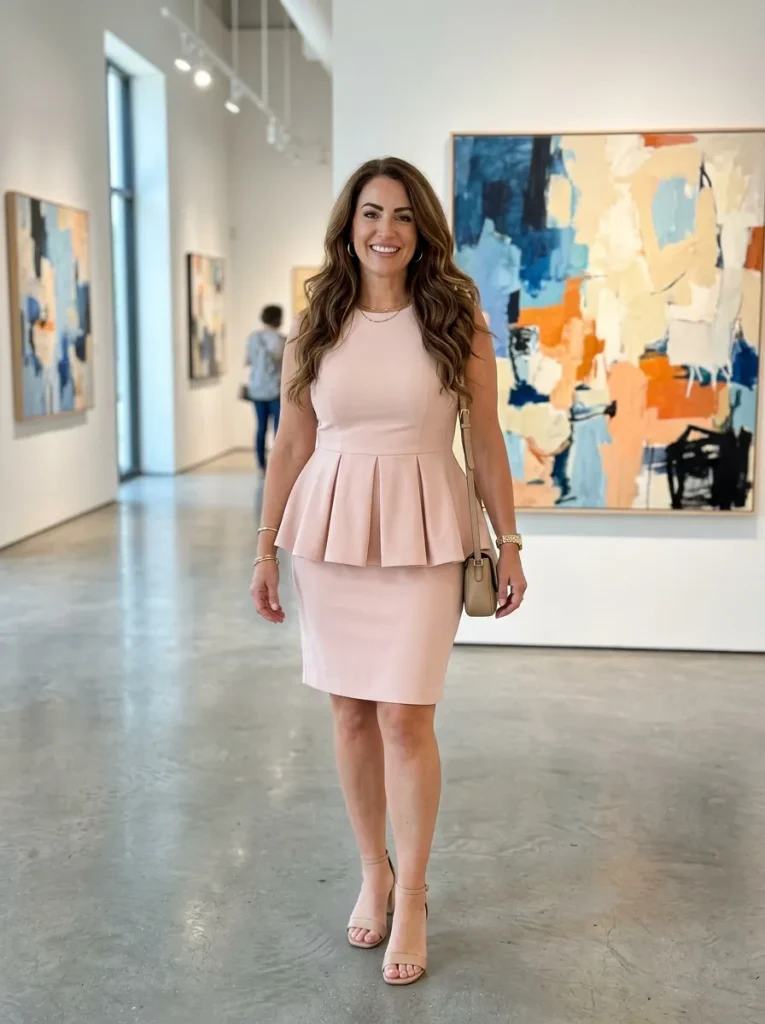
The word “peplum” scares a lot of women. It brings back memories of stiff, bulky office wear.
Modern peplums are much softer. They act like a tiny, structured umbrella for your midsection. The key is finding one that flares out exactly where your waist naturally indents, giving the illusion of an hourglass shape before dropping down over the lower belly.
Avoid peplums that sit too low—they just add volume exactly where you are trying to hide it.
The peplum flare must start at the narrowest part of your torso, not at the hip bone, to successfully hide the stomach.
8. Let Shift Dresses Graze Instead Of Grip
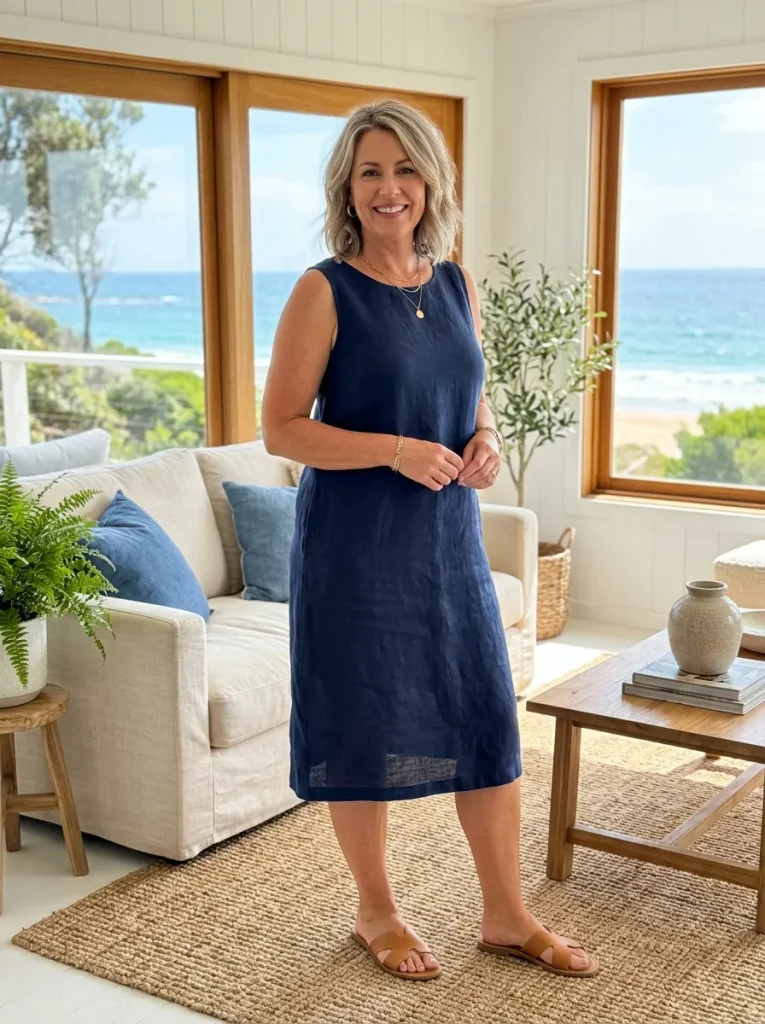
A shift dress hangs straight down from the shoulders. It skips the waist entirely.
The danger with a shift dress is looking like you are wearing a shapeless sack. The goal is to graze the body, showing a hint of a curve without gripping anything. Choose a shift with slight darts at the bust.
- Darts give the dress a feminine structure.
- The straight fall hides the belly entirely.
📌 Good To Know
If a shift dress looks boxy, check the sleeve. A sleeveless or ¾ length sleeve breaks up the blocky shape better than a standard short sleeve.
9. Break Up Proportions With A Tiered Midi
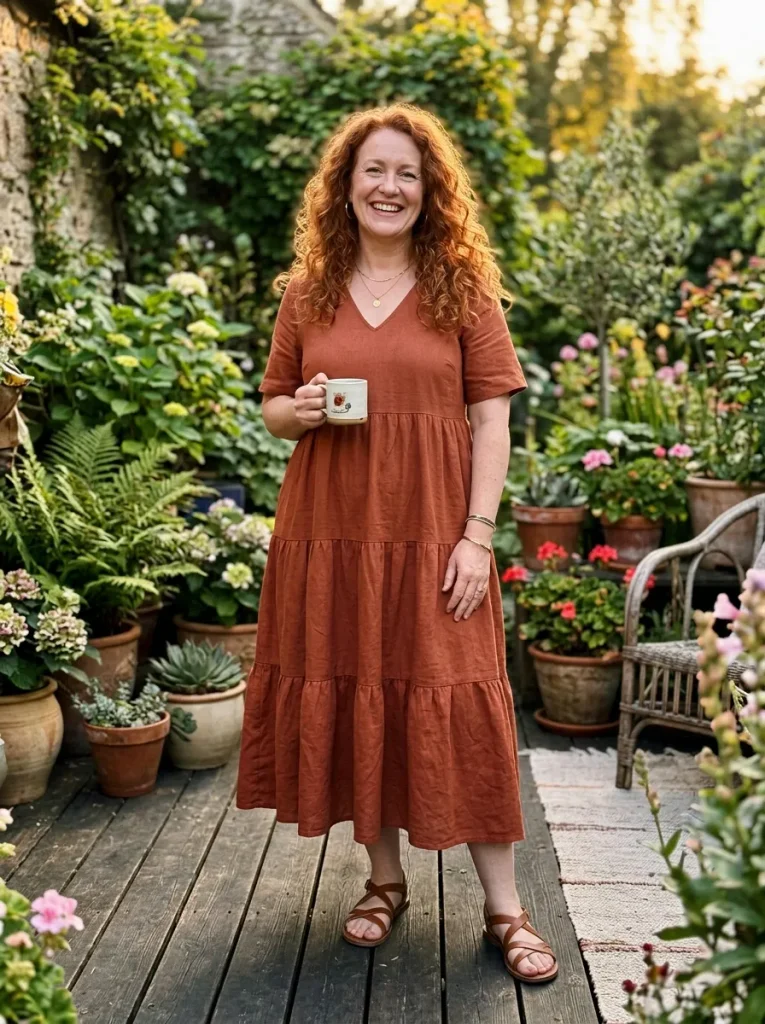
Long, uninterrupted sheets of fabric can make you look wide. Tiers break that up into smaller, flattering blocks.
A tiered midi dress places horizontal seams down the length of the skirt. The first tier usually drops softly from an empire or natural waist, completely floating over the lower belly. The flowing movement distracts the eye.
It is incredibly comfortable for a long day.
A solid block of fabric falling straight from the waist, emphasizing the stomach curve underneath.
Soft, tiered seams add movement and structure, breaking up the torso and hiding the stomach entirely.
10. Layer A Structured Blazer Over A Slip Dress
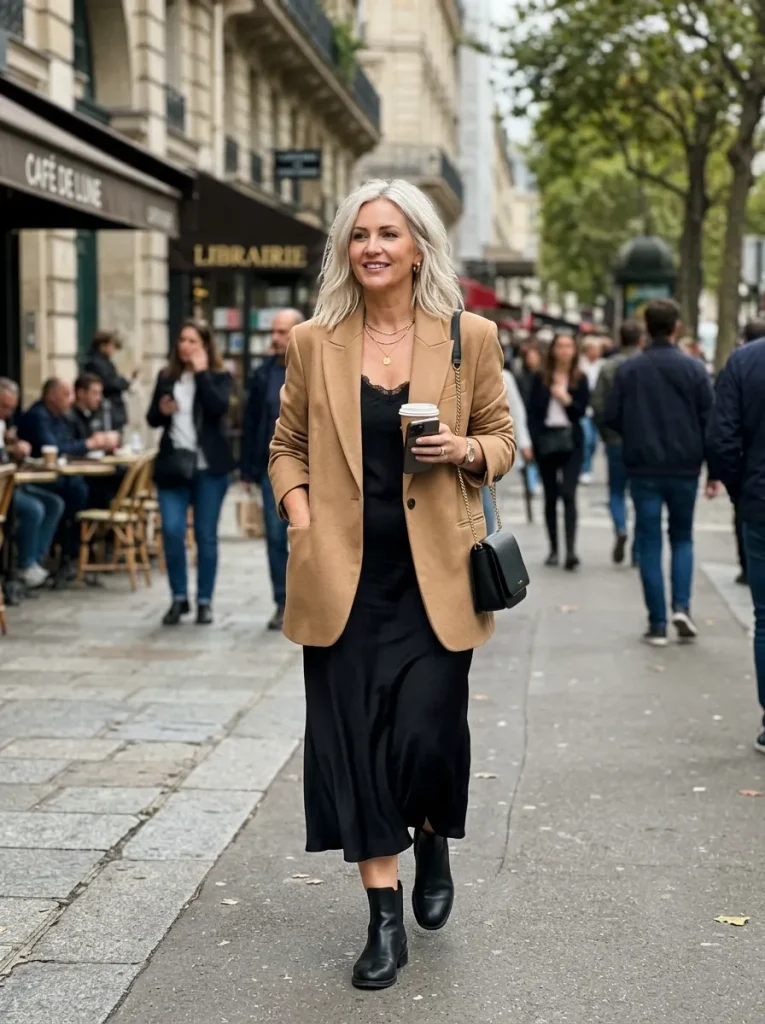
Slip dresses usually highlight every single bump. But you do not have to pack them away.
Throwing a sharply tailored blazer over a soft, clingy dress completely changes the geometry. The straight, rigid lines of the blazer frame your torso and cover the sides of the belly. The eye only sees the slim strip of the dress down the center.
It is an easy way to repurpose tricky items already in your closet.
What to look for in the blazer
11. Trade Thin Jersey For Heavyweight Knits
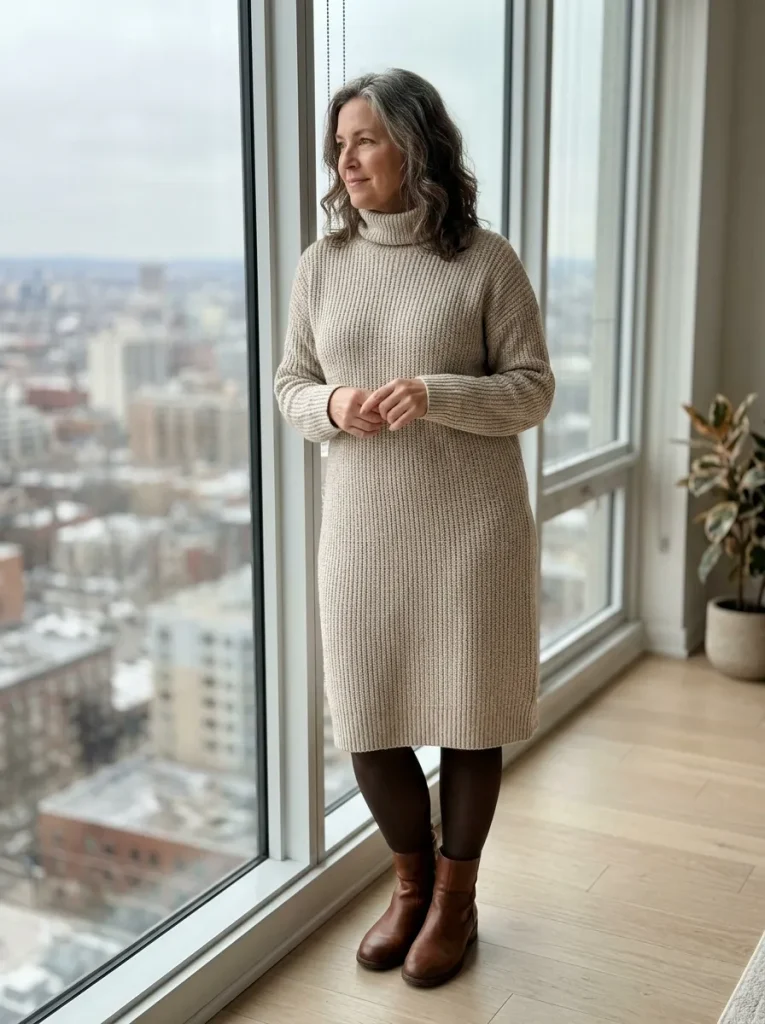
Many women reach for thin jersey dresses because the stretch feels comfortable. In reality, lightweight stretch materials grip the stomach and highlight the belly button indent.
Switching to a heavyweight knit solves this instantly. A dense sweater dress or a thick ponté fabric has enough physical weight to drop straight down from the bust or shoulders. The material smooths you out instead of clinging to static and sweat.
Choose double-knit ponté fabrics.
Look for heavy winter sweater dresses that hold their shape.
Avoid thin modal or viscose blends.
Leave the flimsy, clingy t-shirt dresses on the rack.
12. Use Asymmetrical Hemlines To Distract The Eye
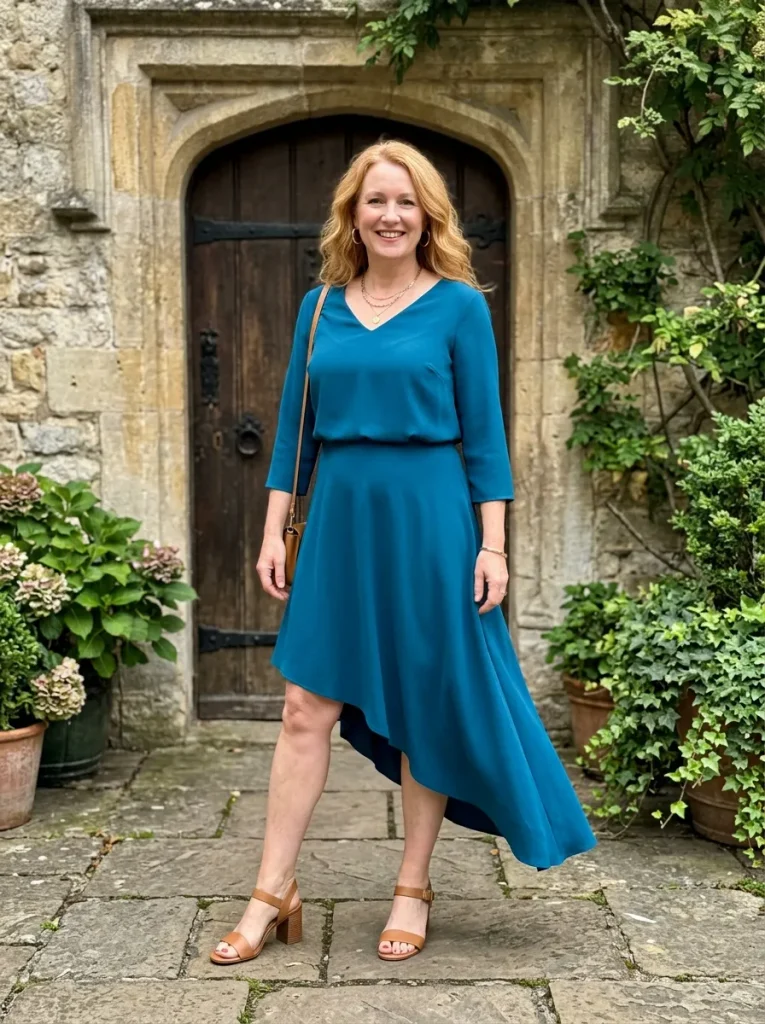
A slanted hemline forces the eye to track diagonally down your legs. It is a simple optical illusion that stops people from looking horizontally across your stomach.
When a dress drops lower on one side, it breaks up the blocky shape of the torso. This works beautifully on wrap dresses or simple midi lengths. You get a sense of movement that distracts from the midsection entirely.
13. Camouflage Bumps With Busy, Abstract Prints
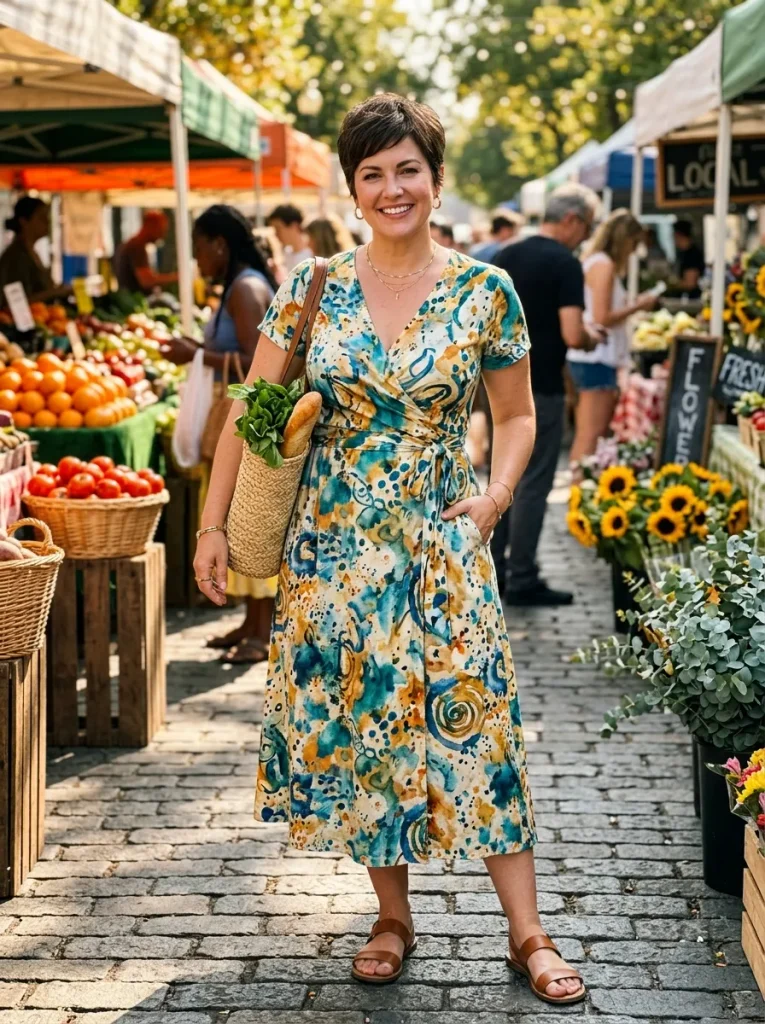
Solid colors show shadows. Busy patterns hide them.
An abstract, chaotic print confuses the eye so much that it cannot figure out where the fabric ends and the stomach begins. Small floral prints, watercolor splashes, or irregular geometric shapes are your best friends here. Just make sure the pattern covers the whole dress, not just the skirt, to keep the illusion seamless.
14. Balance The Lower Body With A Structured Shoulder
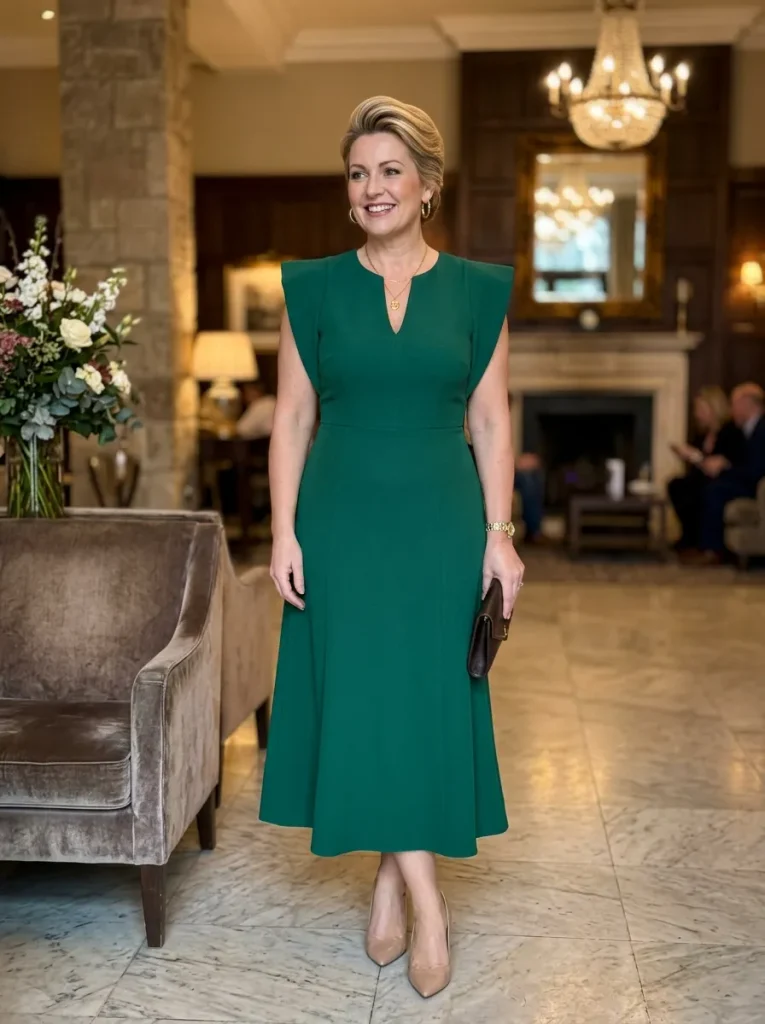
A sloping shoulder makes a round stomach look much wider. A strong shoulder creates a slight inverted triangle effect, which visually shrinks the waist.
You do not need massive vintage shoulder pads. Look for a dress with a subtle puff sleeve, a crisp cap sleeve, or a shoulder seam that extends a quarter inch past your natural arm. It balances your proportions immediately and draws the eye up to your face.
| Sloping Shoulders | Structured Shoulders |
|---|---|
| Raglan sleeves or drop shoulders. | Subtle puff sleeves or crisp seams. |
| Makes the hips and belly look like the widest point. | Creates a balanced, hourglass illusion. |
15. Match Waist Draping With A Cowl Neck
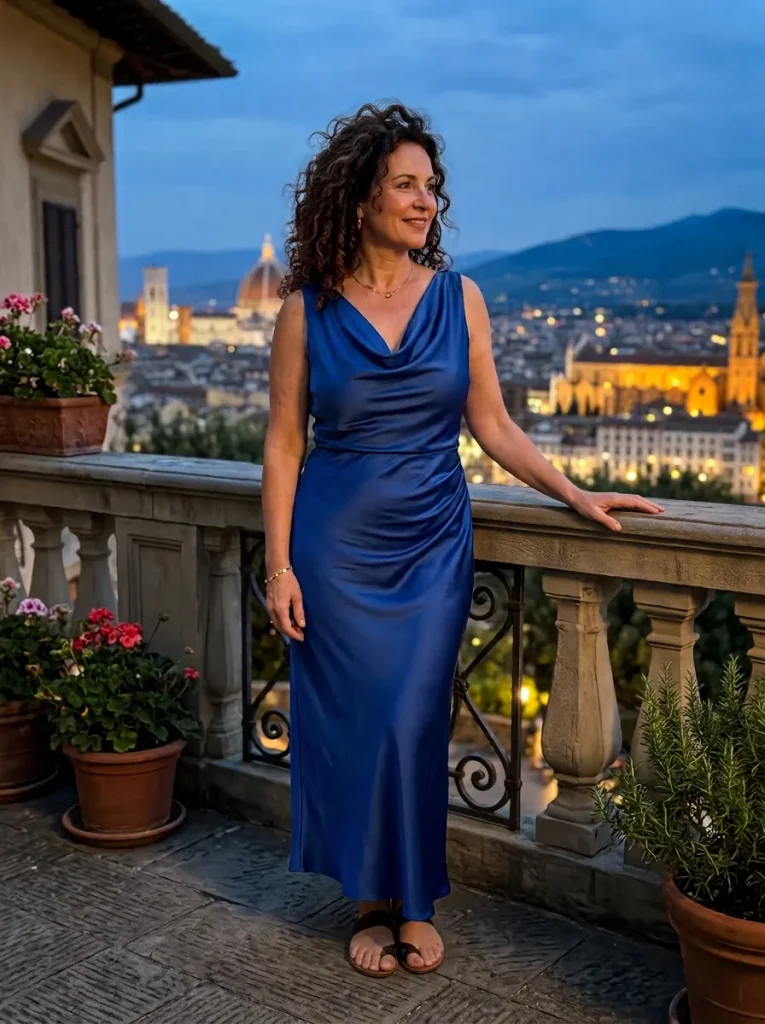
You get double the distraction when you combine upper and lower body draping.
A cowl neckline adds soft volume at the chest, which keeps attention near your face and collarbone. When you pair that with a dress that also has gentle draping near the waist, the entire look feels intentional and romantic. The loose folds work together to skim right over the lower belly without looking like a heavy tent.
16. Anchor A Shirt Dress With A Wide Statement Belt
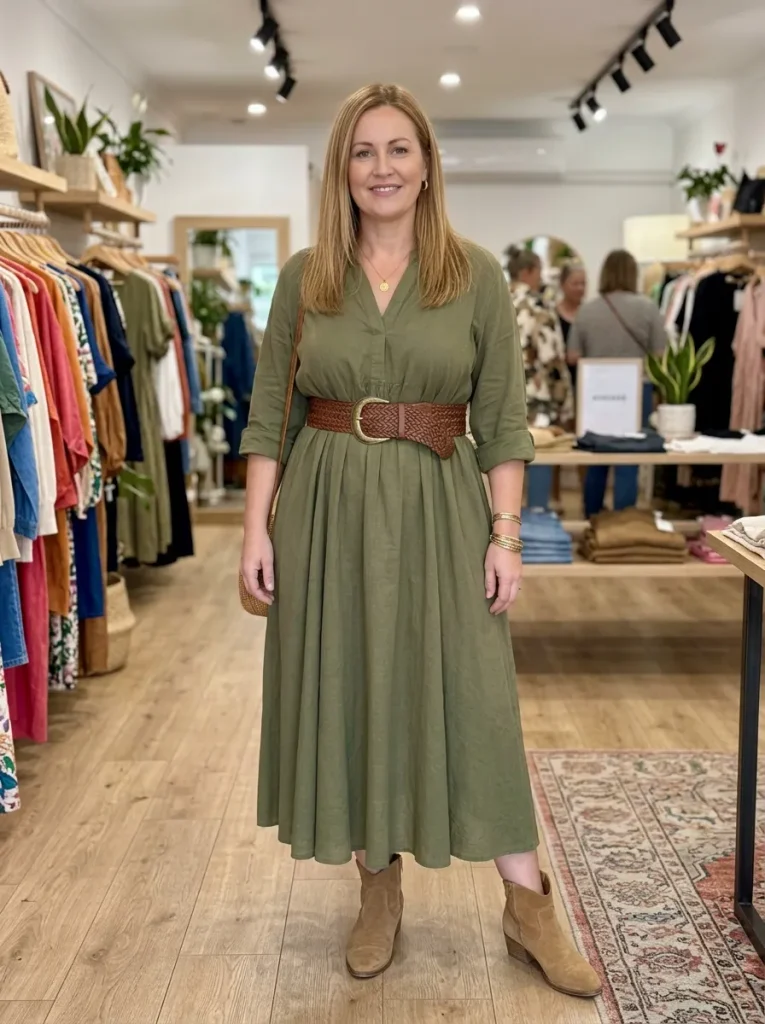
Many women avoid belts because they think the accessory draws unwanted attention to the stomach. A wide statement belt actually does the exact opposite when placed correctly.
If you leave a button-down shirt dress completely loose, it can sometimes hang heavily and look like a nightgown. Take a thick leather or woven belt—at least three inches wide—and fasten it high on the ribs, just under the bust. This cinches your narrowest point and forces the dress fabric below it to flare out gently.
The belt takes the focus, and the stomach stays hidden under the loose skirt.
⚠️ Watch Out
Never use a skinny, thin belt over the belly button. It will dig into the stomach, roll over itself when you sit down, and create a horizontal bulge across your midsection.
17. Try A Tailored Denim Dress For Built-In Structure
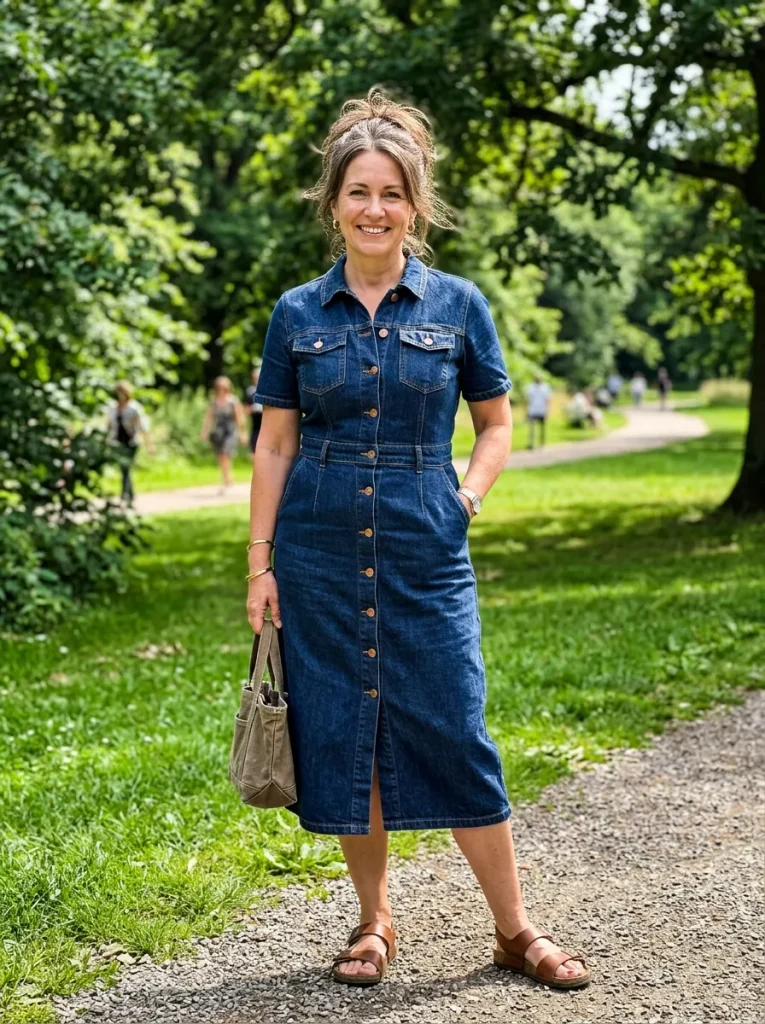
Start looking for rigid materials that stand on their own. Denim is a fantastic option for casual daytime wear because the thick material acts like a gentle, wearable shield.
A tailored denim midi dress with a button front holds its own structure. It glides right over the lower belly without collapsing against the skin or highlighting what is underneath.
Plus, the vertical line of metal buttons down the front gives you a strong vertical line that naturally slims the torso.
Always wash a rigid denim dress with a dash of fabric softener first, so it holds its shape without feeling stiff on your shoulders.
Dressing for your current body should not feel like a battle with your closet. The goal is to find pieces that let you move, sit, and breathe without secretly tugging at the fabric all day long. By choosing smarter fabrics, shifting your waistlines, and looking for strategic draping, you can completely change how an outfit functions. Finding dresses that hide lower belly 2026 trends offer is really just about focusing on structure rather than restriction. You deserve to put on a dress, walk out the door, and then forget about it for the rest of the day.