
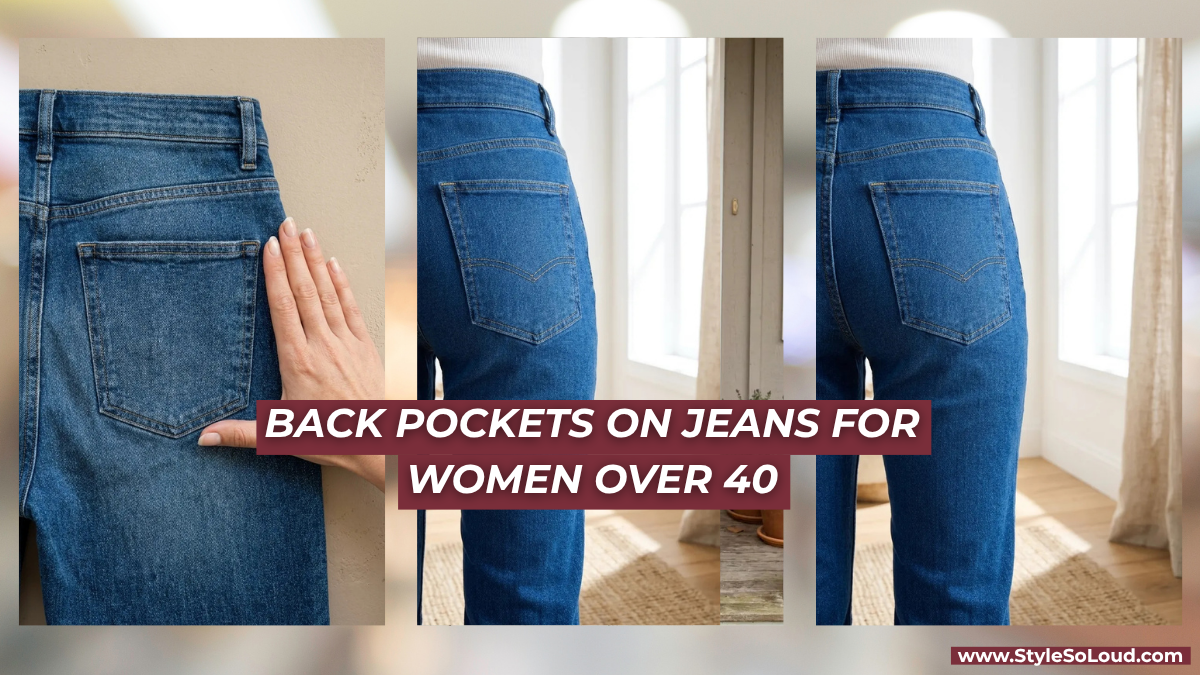
Back pockets are the one part of your jeans you never see while you’re wearing them, and the part everyone behind you does. It’s a strange blind spot. You can spend twenty minutes checking the front fit and walk out with a pair that does you no favors from behind.
The thing is, pockets are not just decoration. Their size, their placement, and how close they sit all change how the whole back view reads. Get them right and your jeans lift and shape without a single bit of effort from you. Get them wrong and even a well-fitting pair can look flat or wider than it is.
That’s what makes the best back pockets on jeans for women over 40 worth a closer look. It’s a small detail that quietly does a lot of work.
This list walks through exactly what to look for, so the next time you turn around in the mirror, you already know what you’re checking.
1. Look for Pockets That Sit Higher on the Seat
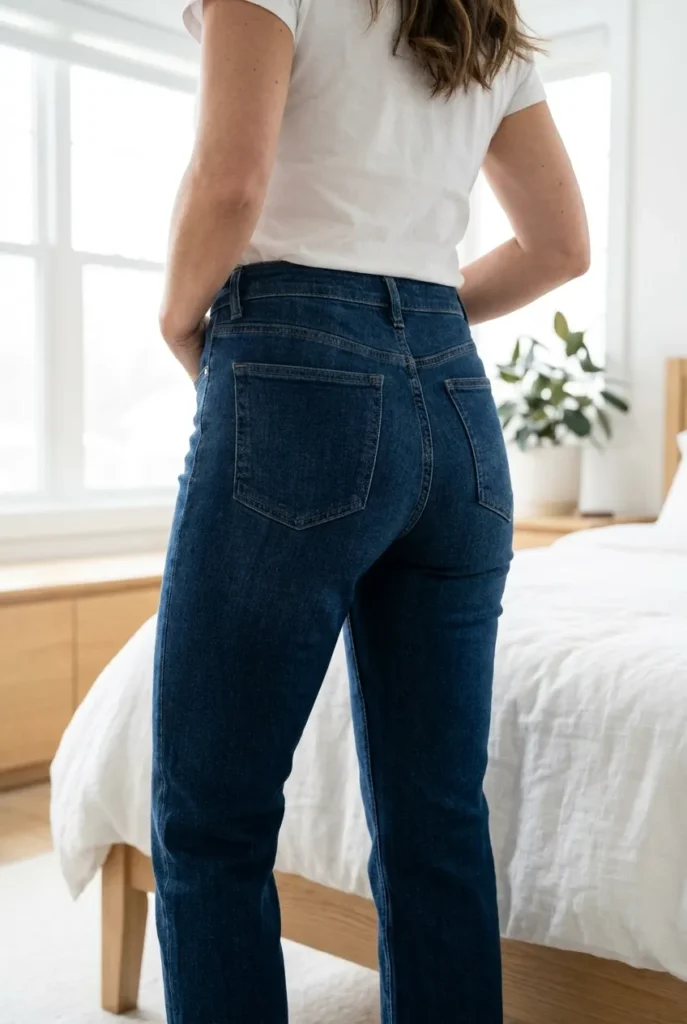
Placement matters more than almost anything else back here. Pockets that ride low drag the whole backside down with them and add a droopy, heavier look.
Higher-set pockets do the opposite. They lift the eye and give the seat a rounder, perkier shape, the way a good bra lifts from the front. The pocket essentially acts as a frame, and where you place that frame decides what it flatters.
There’s a simple way to judge it. The bottom edge of the pocket should sit at or just above where your seat starts to curve under, not below it.
Choose pockets that sit high on the seat to lift and round.
Check the bottom edge lands at or above the curve.
Low-slung pockets that drag the backside down.
Pockets that hang below where the seat curves under.
2. Aim for a Medium Pocket, Not Tiny and Not Oversized
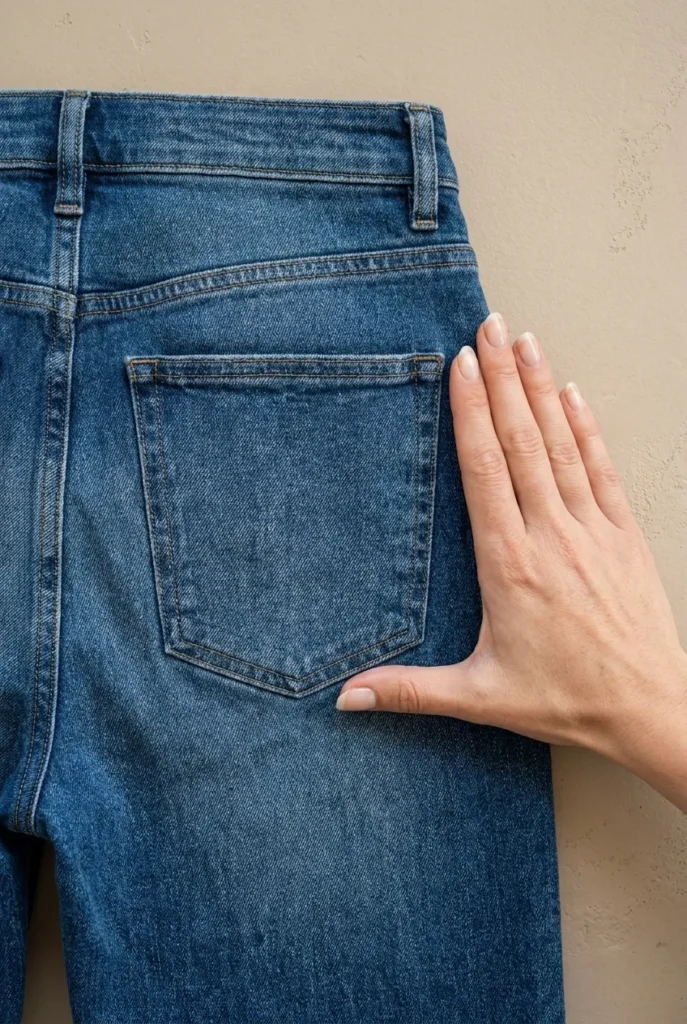
Size plays a quiet trick on the eye. A tiny pocket makes everything around it look larger by comparison, so the seat reads wider than it is. Go too big the other way and the pocket swallows the shape and looks sloppy.
Medium is the sweet spot. A pocket roughly the width of your hand covers the seat in nice proportion and keeps the whole back view balanced.
The trend swings between extremes, so this is one place to trust proportion over what’s popular this season.
| Tiny or oversized | Medium, hand-sized |
|---|---|
| Tiny makes the seat look wider. | Covers the seat in good proportion. |
| Oversized swallows the shape. | Keeps the back view balanced. |
| Follows the trend, not your frame. | Works on almost every body. |
3. Watch the Gap: Pockets Set Closer Together Read Slimmer
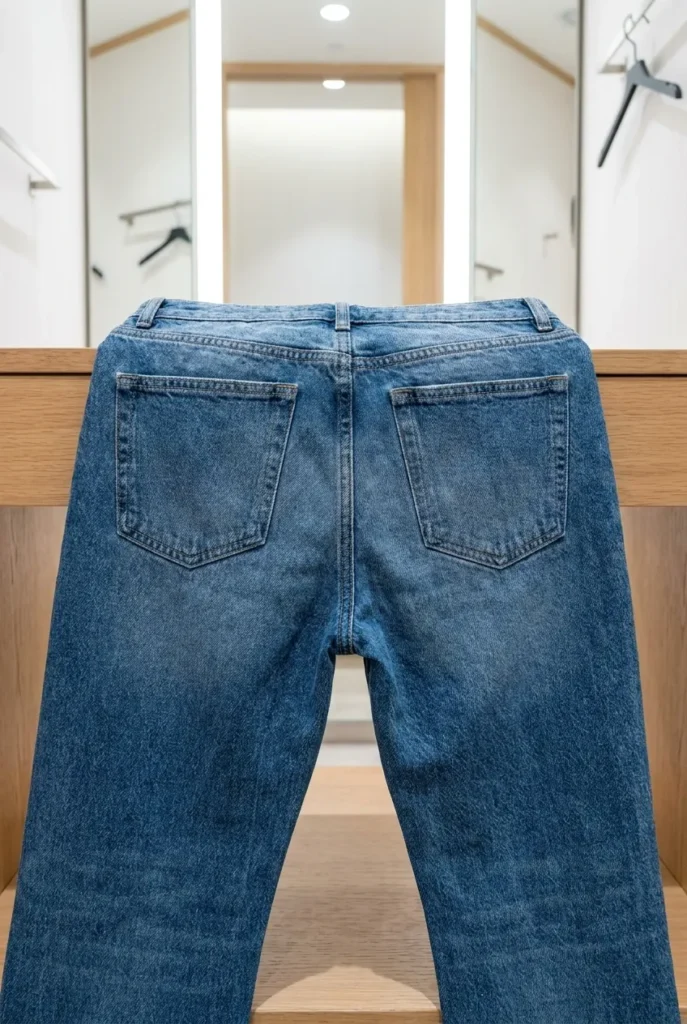
Here’s a detail most people never notice until it’s pointed out. The space between the two pockets changes how wide the seat looks. Pockets set far apart, out toward the side seams, pull the eye outward and add visual width.
Bring them closer to the center and the effect flips. The eye reads a narrower middle, and the whole backside looks more lifted and pulled in.
You don’t need a ruler. Just glance at whether the pockets crowd the sides or sit comfortably toward the middle of the seat.
4. Pick an Angled or Slightly Curved Pocket Shape
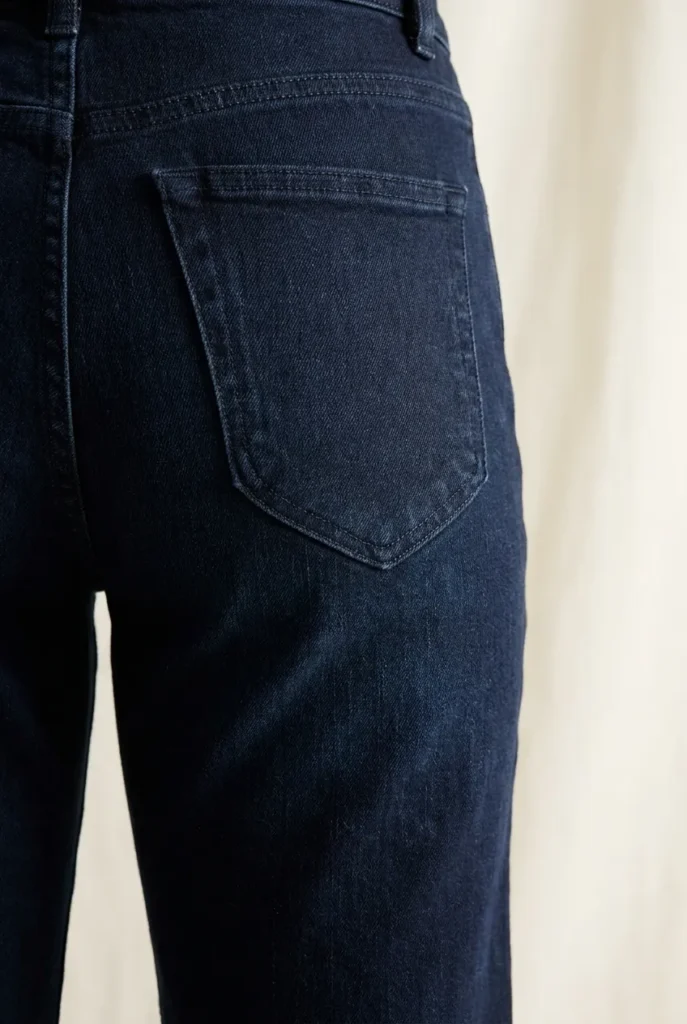
Shape is where pockets get their personality, and a few work harder than the rest. A straight, boxy square sits flat and does nothing for the curve underneath it.
An angled pocket, tilted slightly inward at the bottom, follows the natural line of the body and creates a subtle lift. A gently curved bottom edge does the same softer job. Both flatter more than a hard square outline.
💡 Quick Tip
If you can only remember one thing about shape: angled or softly curved beats a hard flat square. The slight tilt does the lifting for you.
5. Be Careful With Pull-On Jeans That Have No Back Pockets
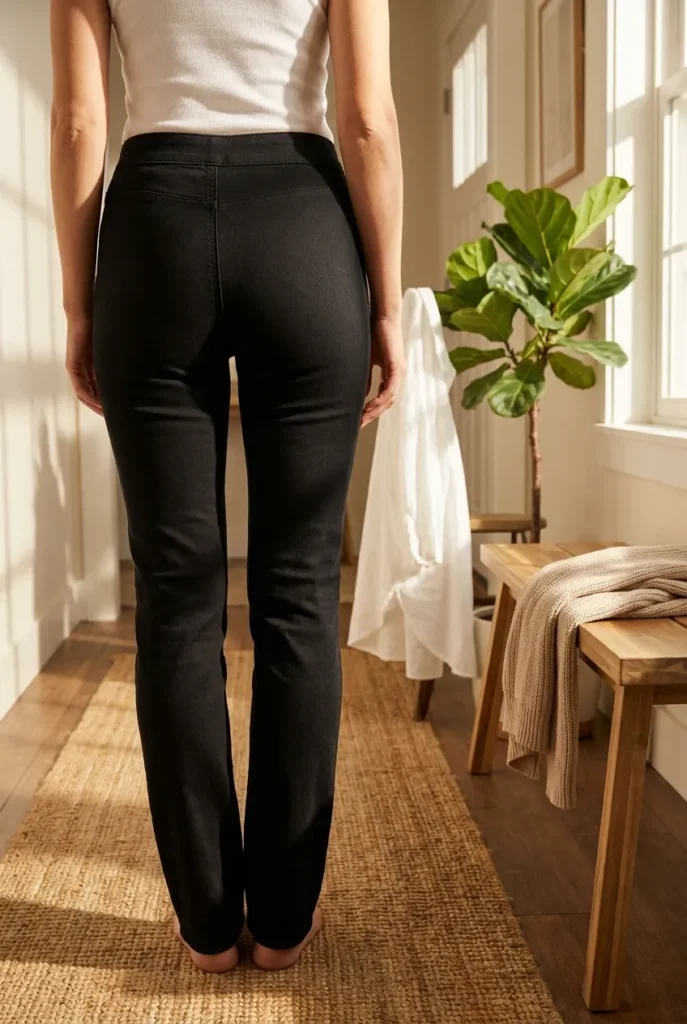
Pull-on and jegging styles feel wonderful, and there’s a reason so many of us reach for them. But a lot of them skip back pockets entirely, and that leaves a wide, flat, unbroken stretch of denim across the seat.
Without pockets to break it up and add shape, the back view can look bigger and more shapeless than the jeans actually are. That doesn’t mean you have to give them up. It just means checking the back before you fall for the comfort.
If you love pull-on jeans, check for
6. Use Flap Pockets to Add Shape Where You Want It
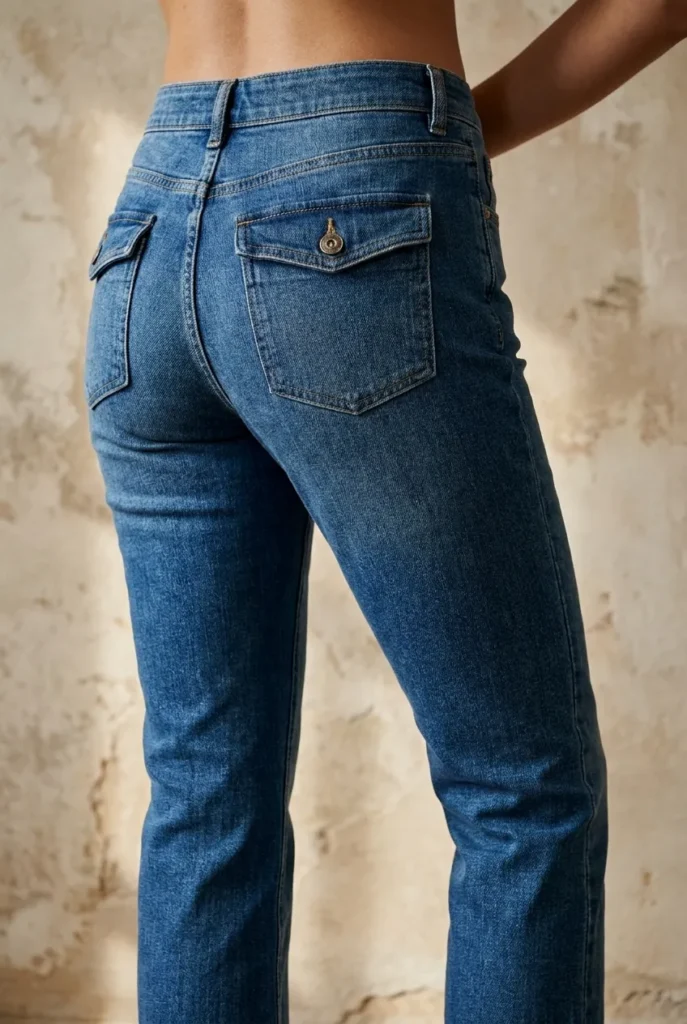
Flap pockets, the kind with a buttoned or snapped cover, get overlooked on jeans. But they do something plain pockets can’t. The extra layer of fabric adds a little dimension and structure right where you want a bit more shape.
If your seat is on the flatter side, a flap builds in some volume and roundness. The cover catches light and breaks up the flat denim, so the back reads fuller and more defined.
Keep the flap itself simple and close to the same denim color. You want the shape it adds, not a loud detail shouting for attention.
A flat plain pocket on a flatter seat, leaving the back view looking straight up and down with no shape.
A tonal flap pocket adds a layer of structure, so the seat reads fuller and more rounded.
7. Skip Loud Bling and Heavy Studs After 40
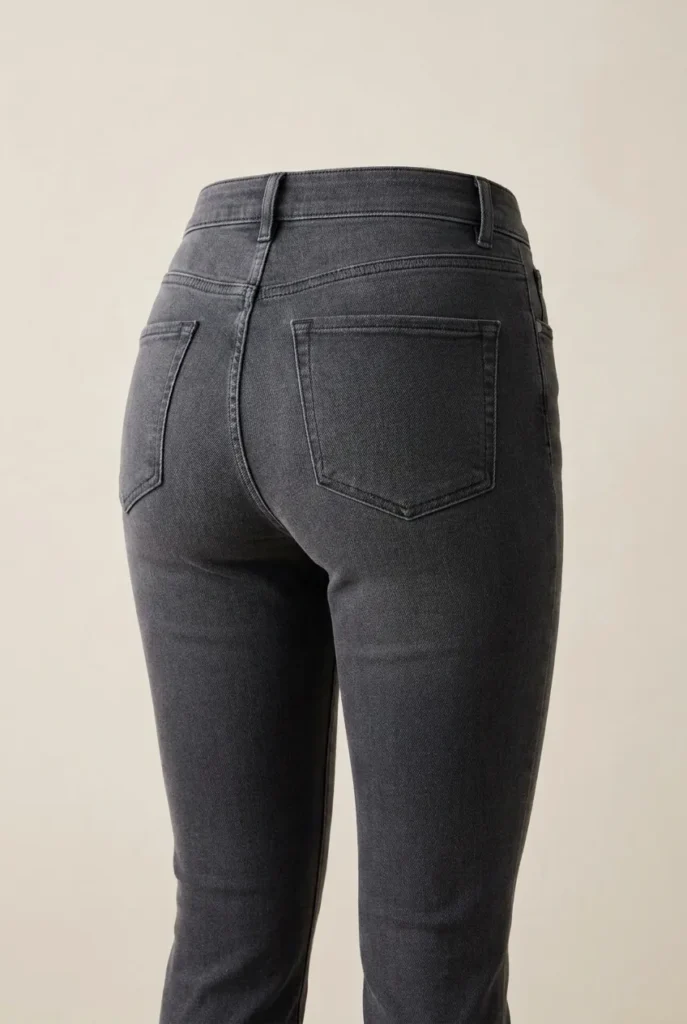
Rhinestones, thick embroidery swirls, and rows of metal studs across the back pockets had their moment, and that moment has passed for most of us. Heavy decoration draws the eye straight to the widest part of the seat, which is rarely what you want.
There’s also the practical side. Big studs and crystals catch on chair backs, dig in when you sit, and date a pair of jeans fast.
A clean pocket almost always looks more expensive than a busy one. Let the fit do the talking.
A plain, clean pocket looks more polished than a blingy one, and it never draws the eye to the widest spot. When in doubt, simpler wins.
8. Let Topstitching Do Quiet Lifting Work
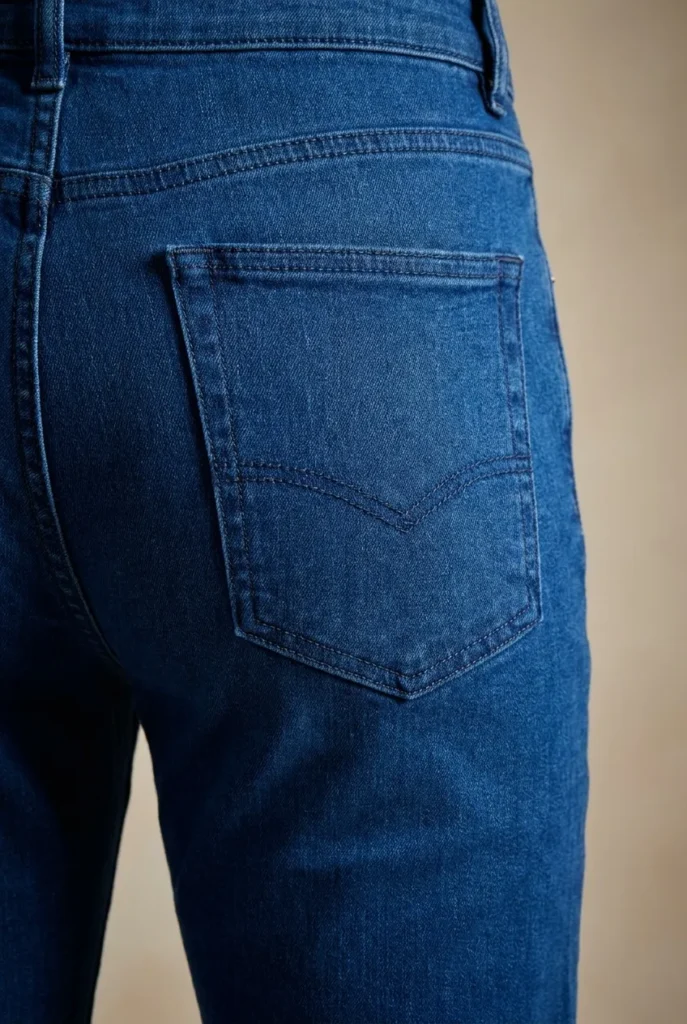
Topstitching is the decorative thread stitched onto the pocket, and it’s sneakier than it looks. The right pattern can trick the eye into seeing lift and shape that isn’t fully there.
A subtle V or gently curved line of stitching draws the eye upward and inward, mimicking a lifted seat. A flat horizontal line across the bottom does the reverse and can look like it’s cutting the pocket off.
Here’s how to read the stitching at a glance before you commit.
Look for a soft V or upward curve, which reads as lift.
Be wary of a flat straight line that cuts across the bottom.
Keep the pattern small and simple, not busy or oversized.
9. Match Pocket Size to Your Frame, Not the Trend
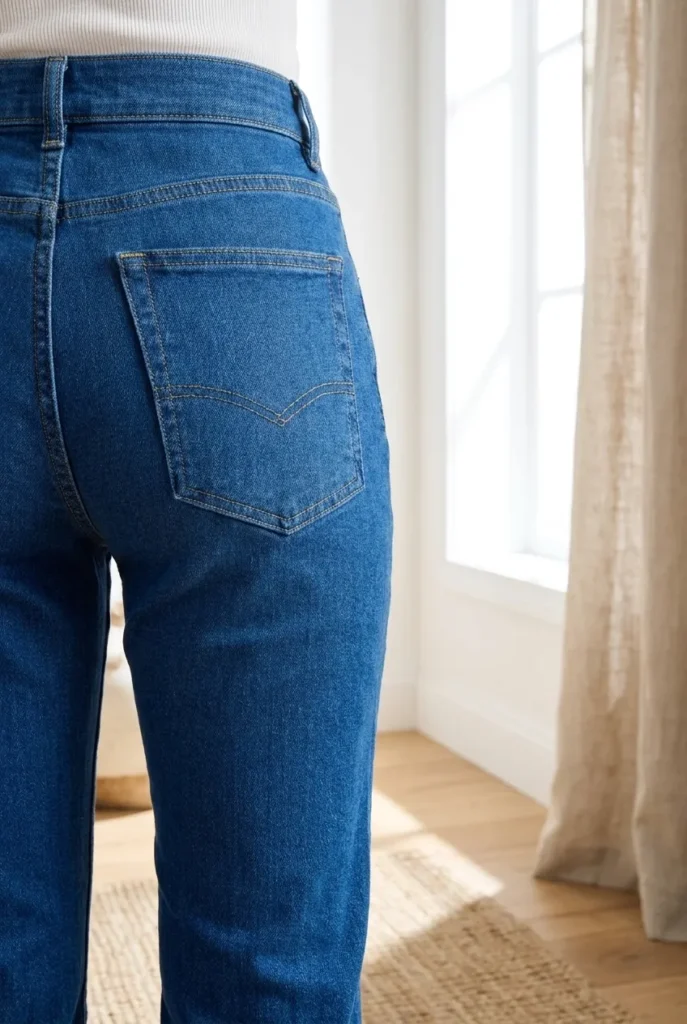
A pocket that flatters your friend can do nothing for you, and the reason is proportion. The same medium pocket reads differently on a petite frame than on a tall or broader one.
On a smaller frame, a slightly smaller pocket keeps things in scale, since a large one can overwhelm. On a taller or fuller frame, a fraction more size balances the seat better. It’s less about a fixed measurement and more about what sits in proportion to you.
10. Choose Tonal Thread for a Cleaner, Longer Line
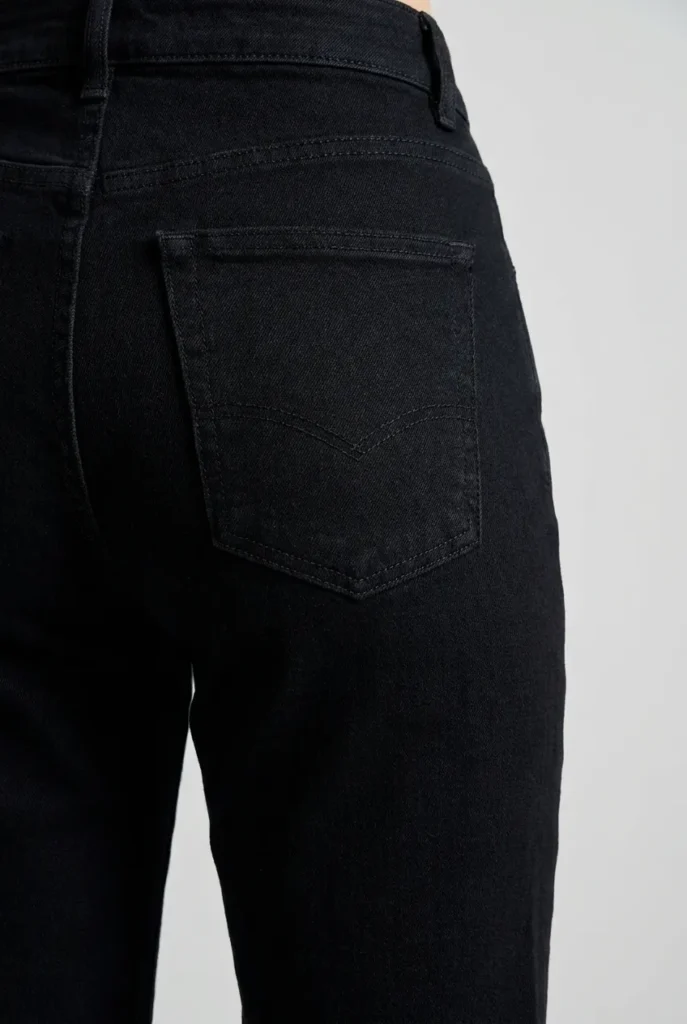
Thread color is a tiny choice that changes the whole feel of a pocket. Contrast stitching, like bright gold thread on dark denim, outlines the pocket in a bold box and pulls the eye right to it.
Tonal thread, close to the denim color, softens that outline. The pocket blends into the seat, the back reads as one smooth line, and the look feels more refined and current.
There’s a time for contrast stitching, mostly on casual, classic five-pocket jeans. But when you want a longer, cleaner line, tonal wins.
- ▸Tonal thread blends the pocket into the seat for a smooth line.
- ▸Contrast thread boxes the pocket and pulls the eye to it.
- ▸Save bold gold stitching for casual, relaxed days.
- ▸Reach for tonal when you want the dressier, longer look.
11. Know When Seam Pockets on Trouser Jeans Work Better
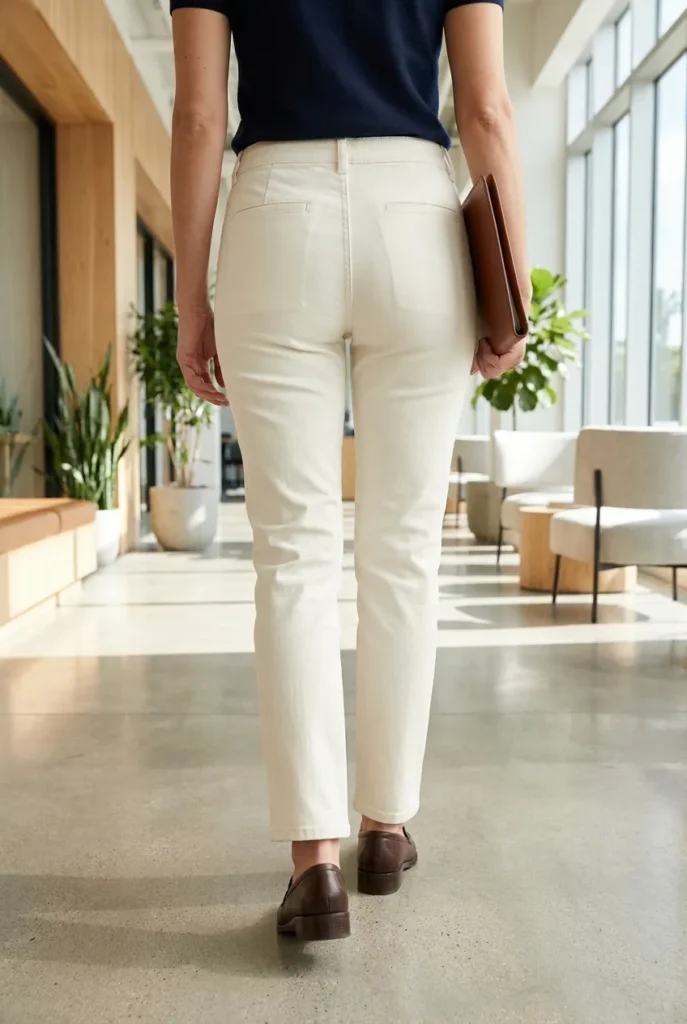
Not every jean is trying to be casual, and the dressier trouser styles play by different rules. Some skip the classic patch pocket for a slim welt or seam pocket, the flat kind set into the fabric with just a stitched opening.
On a relaxed five-pocket jean, that flat pocket can leave the back looking bare. But on a tailored trouser jean, it’s the whole point. It keeps the line clean and formal, the way a good pair of dress pants does, and reads more polished for work or evening.
So match the pocket to the job. Patch pockets for everyday denim, seam pockets when you want the jean to pass as trousers.
| Patch pocket | Seam or welt pocket |
|---|---|
| Adds shape to casual denim. | Keeps a clean, formal line. |
| Best for everyday, relaxed looks. | Best for trouser jeans and dressy days. |
| Can look bare on tailored styles. | Can look flat on casual five-pockets. |
12. Avoid Pockets Placed Too Low on the Backside
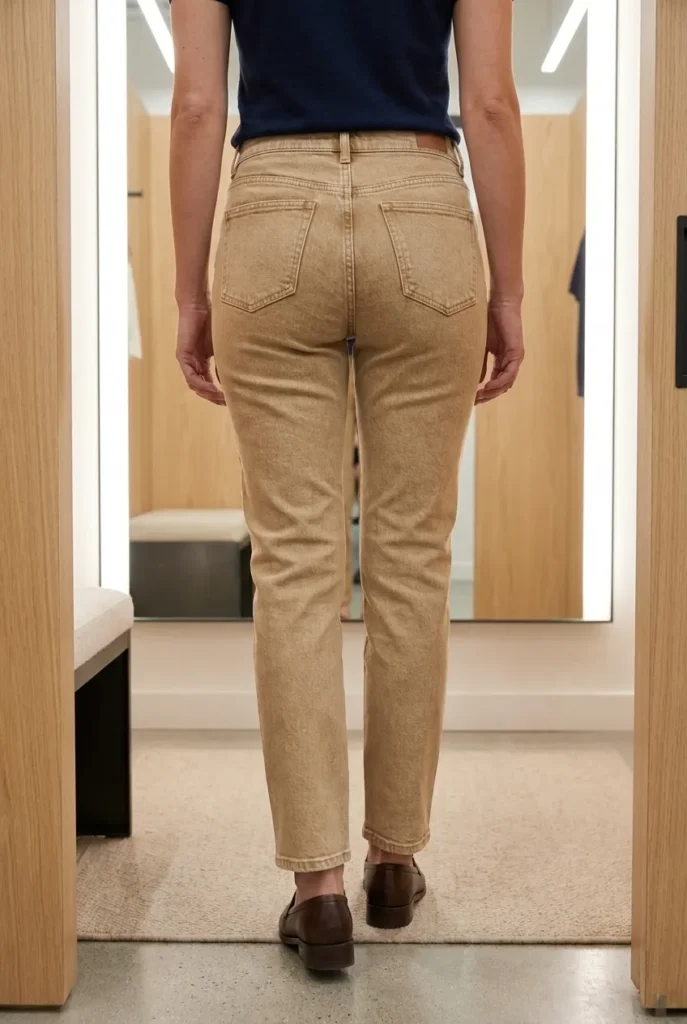
We touched on high placement early on, but low placement deserves its own warning, because it’s the single most common pocket flaw on cheaper jeans. When the pocket sits too far down, it drags the visual weight of the seat down with it.
The effect is a longer, flatter, saggier look, even on a body that isn’t. And once the pocket is sewn on wrong, no styling trick fully fixes it. This is one you catch before you buy, not after.
The tell is easy. If the bottom of the pocket dips onto the underside of the seat, put them back on the rack.
Keep the pocket on the upper, rounded part of the seat.
Catch placement in the fitting room, before you buy.
Pockets that dip onto the underside of the seat.
Hoping to fix low placement with styling later.
13. Check Pocket Placement in a Three-Way Mirror
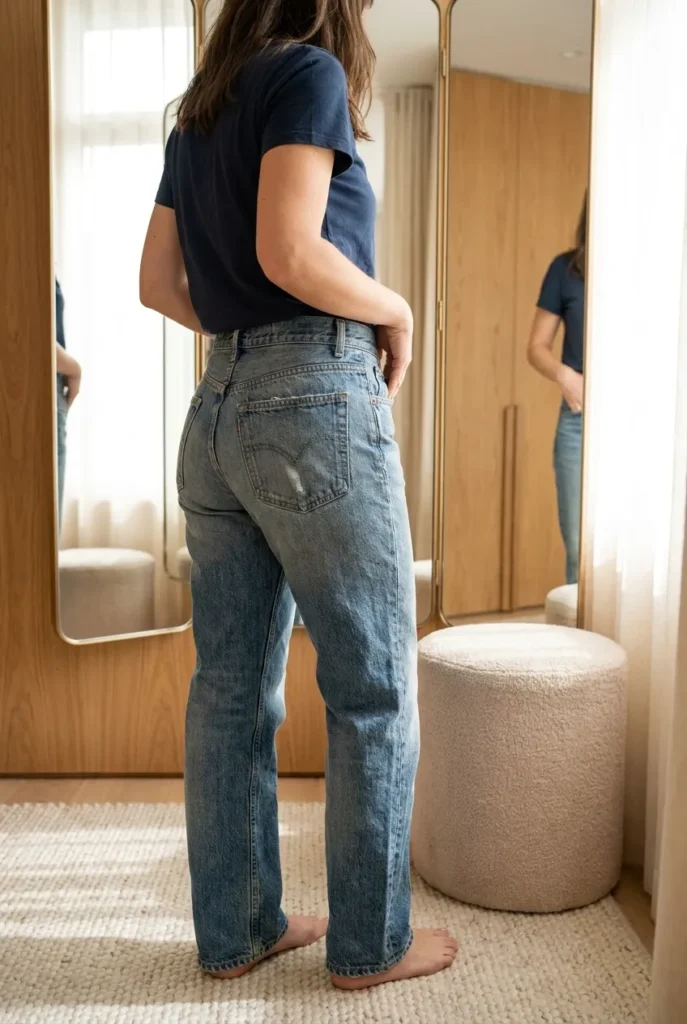
Here’s the honest problem with buying jeans: you fit the front while looking straight ahead, and never really see the part other people do. A phone photo helps, but a three-way mirror is better, because you catch the pockets in motion and at an angle.
Turn slowly and watch what the pockets actually do back there. It takes thirty seconds and saves you from a pair that only looked good from the front.
Stand naturally and glance at the pockets from the side angle.
Check that both pockets sit even and at the same height.
Sit down, stand back up, and look again for sagging or pulling.
14. Let Subtle Embroidery Add Interest, Used Lightly
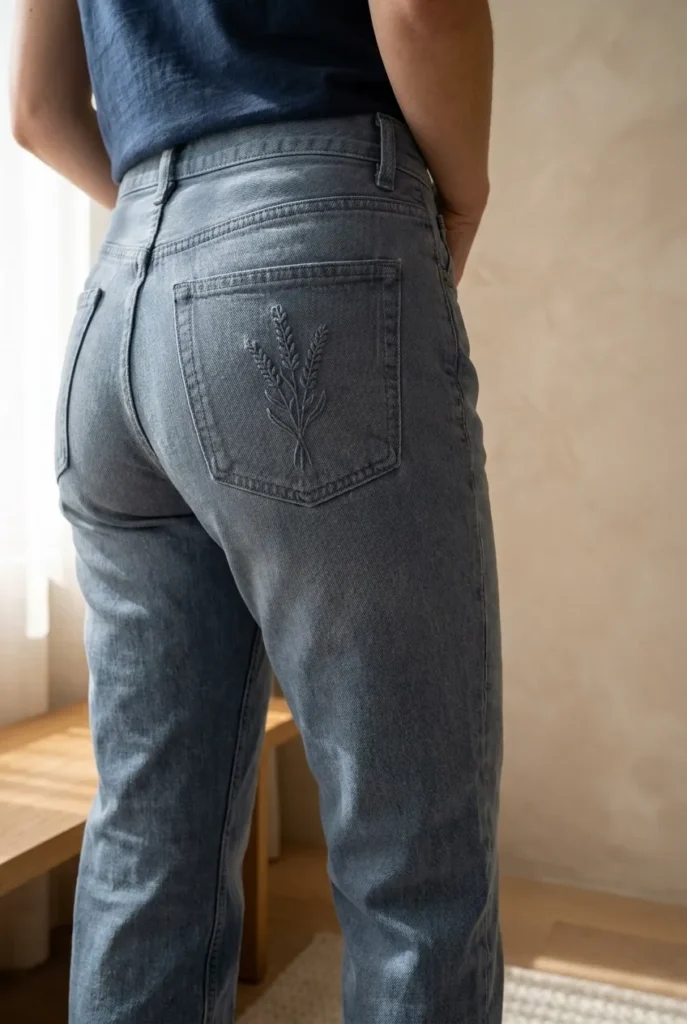
Not all decoration is off limits after 40. A small, tone-on-tone embroidered detail on the pocket adds a bit of personality without the loud, dated feel of studs and crystals.
The key word is subtle. A fine stitched motif in a thread close to the denim color gives the jeans a quiet, custom touch. Bold multicolor patches or large logos do the opposite and pull focus.
Think of it like a small piece of jewelry rather than a statement necklace. A little goes a long way.
15. The Quick Back-Pocket Test Before You Buy
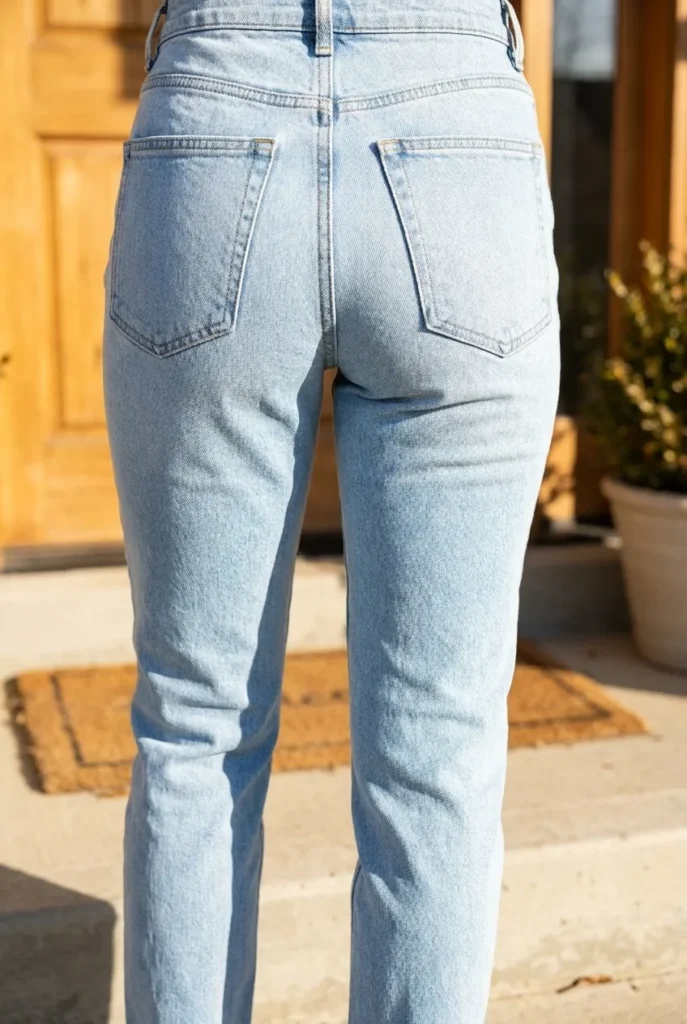
By now you’ve got a lot to look for, so here’s the whole thing boiled down to a fast check you can run on any pair in under a minute. No measuring, no overthinking, just a glance over your shoulder against a few simple points.
Keep this one in your back pocket, so to speak, for the next time you’re in a fitting room and short on patience.
The 60-second back-pocket check
It’s the Small Detail That Does the Big Work
Back pockets are proof that the little things add up. You don’t need a whole new pair to look better from behind. You just need to know what you’re checking, and now you do. Placement high on the seat, a medium size, a gap toward the center, a soft angled shape, and quiet tonal stitching.
The best back pockets on jeans for women over 40 aren’t about a single brand or a big price tag. They’re about a handful of details that quietly lift and shape while you go about your day.
Save this list for your next fitting-room trip, so you can turn around, take one glance, and know exactly what you’re looking at.
High-set, medium, toward the center, angled, and tonal. Five quick things to check, and your jeans flatter from every angle. 📌 Pin it for your next shopping trip.