Thin straight hair has a frustrating habit. It looks fine in the mirror after a wash, then falls flat by lunch, and no amount of brushing seems to bring the body back. The problem is rarely the hair itself. It is usually the cut, which either weighs the hair down with too much length or thins it out with layers in the wrong places. A good cut for thin straight hair does the opposite. It builds shape where the hair needs lift, keeps the ends looking full, and makes styling easier rather than harder. This list gathers 20 haircuts that do exactly that, from layered bobs and textured pixies to long cuts with hidden layers and curtain fringes. Each idea is shown with a real photo, so you can see the shape, the length, and the finish before you book. Take the ones you like to your stylist, point to the details that appeal to you, and ask how the cut would work with your own hair. The right cut will not change your hair type, but it can change how full it looks every single day.
1. The Layered Bob That Lifts From the Roots

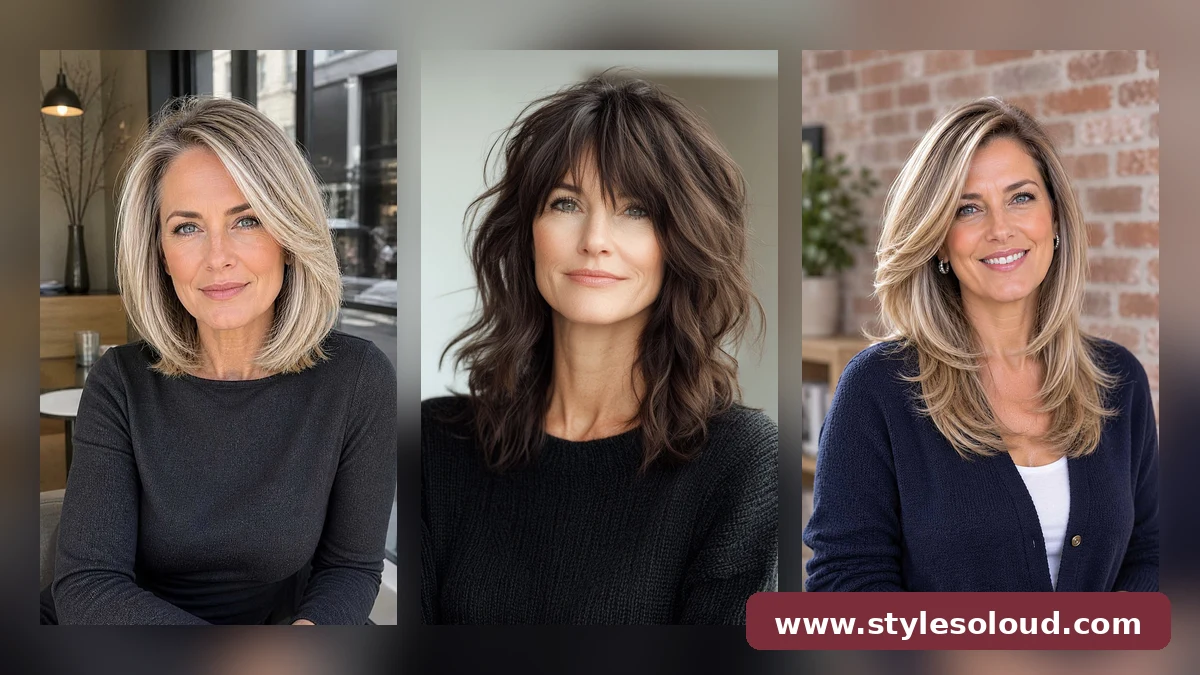
A layered bob works because it removes weight where thin hair goes limp and adds shape where it needs lift. Shorter layers at the crown give the top some height, while the ends keep enough length to swing. In the photo, soft layers around the face keep the cut from looking severe, and the side fringe adds movement across the forehead. Ask your stylist to keep the layers blended rather than choppy, so the shape grows out gracefully.
Blow dry the roots upward with a round brush, then let the ends fall naturally. A light volumizing mousse at the roots helps more than a heavy cream, which can pull fine hair down. This cut suits busy mornings, since it holds its shape with very little restyling between washes.
Recreate this look
2. A Shaggy Lob With Soft Waves and Volume
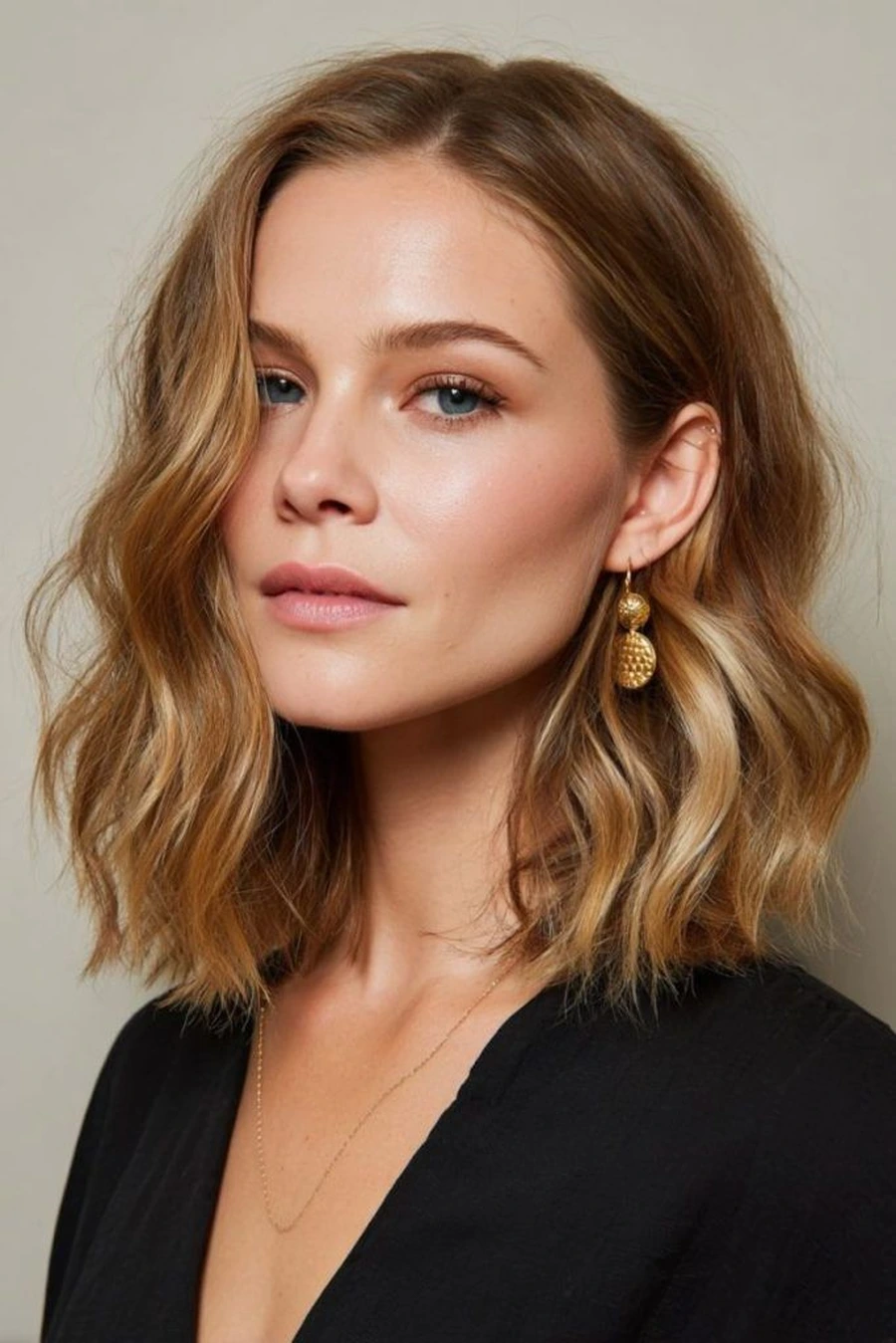
A shaggy lob gives thin hair a lived in fullness that a blunt cut cannot. The waves in the photo come from feathered ends and layers that start near the cheekbones, so the hair moves instead of hanging in one flat sheet. Length stays past the chin, which keeps the cut feeling grown up and easy to wear. It is a good middle ground when a short bob feels too bold and long hair feels too heavy.
Scrunch in a little texturizing spray while the hair is damp, then let it air dry or diffuse it on low heat. The goal is texture, not tight curls. If your hair is naturally straight, a few loose bends with a flat iron through the mid lengths will give the same airy finish.
Ask for feathered layers starting near the cheekbones.
Keep the overall length at or just past the shoulders.
Add texturizing spray to damp hair and scrunch lightly.
Let it air dry for a soft, airy finish.
3. The Blunt Bob With Full, Clean Ends
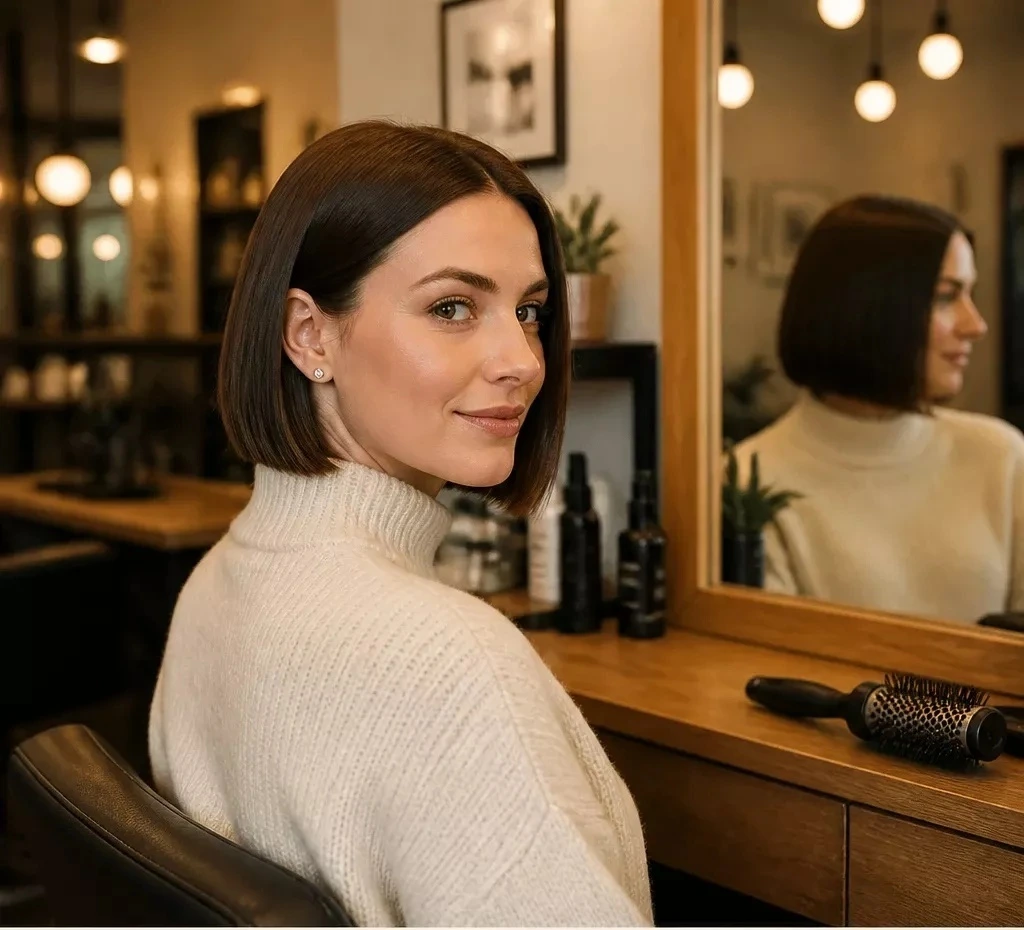
A blunt bob looks thicker because the ends all finish at the same line, so there is no thin, wispy edge to give the game away. In the salon photo, the dark bob sits cleanly at the jaw with a smooth, even hem, and the mirror view shows how tidy the shape stays from behind. For straight hair, this clean edge is the whole trick. It reads as dense even when the hair itself is fine.
Keep the ends trimmed every six to eight weeks, since even a little split damage thins the hemline fast. A smoothing serum on the ends adds shine without weight. Straighten in sections if you want a glassy finish, or tuck one side behind the ear for a softer day to day look.
| Blunt bob | Heavily layered bob |
|---|---|
| Ends finish in one clean line | More movement through the lengths |
| Looks denser at first glance | Ends can look thinner over time |
4. Curtain Bangs Paired With Long Layers

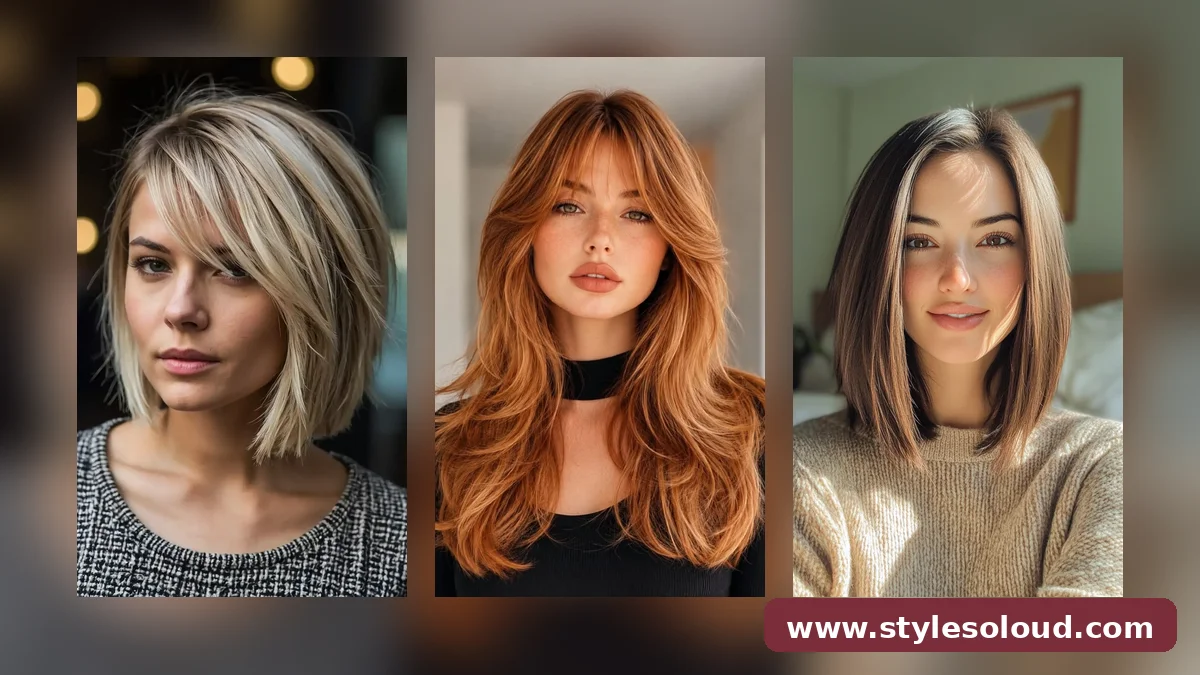
Curtain bangs change the whole frame of a long cut without taking much length away. Here, long auburn layers fall past the shoulders while soft fringe pieces part in the middle and sweep back from the face. That opening around the forehead keeps long hair from dragging the features down. The layers through the lengths add gentle movement, so the hair looks full rather than stringy at the ends.
Part the fringe in the middle and blow dry each side away from the face with a round brush. A root lift spray at the part helps the fringe sit open instead of falling flat on the forehead. Trim the fringe every three to four weeks, since curtain pieces grow into the eyes quickly.
- ▸Part the fringe in the middle for an open frame.
- ▸Blow dry each side away from the face.
- ▸Keep length through the back for balance.
- ▸Refresh the fringe trim often.
5. The Short Textured Pixie With Natural Movement
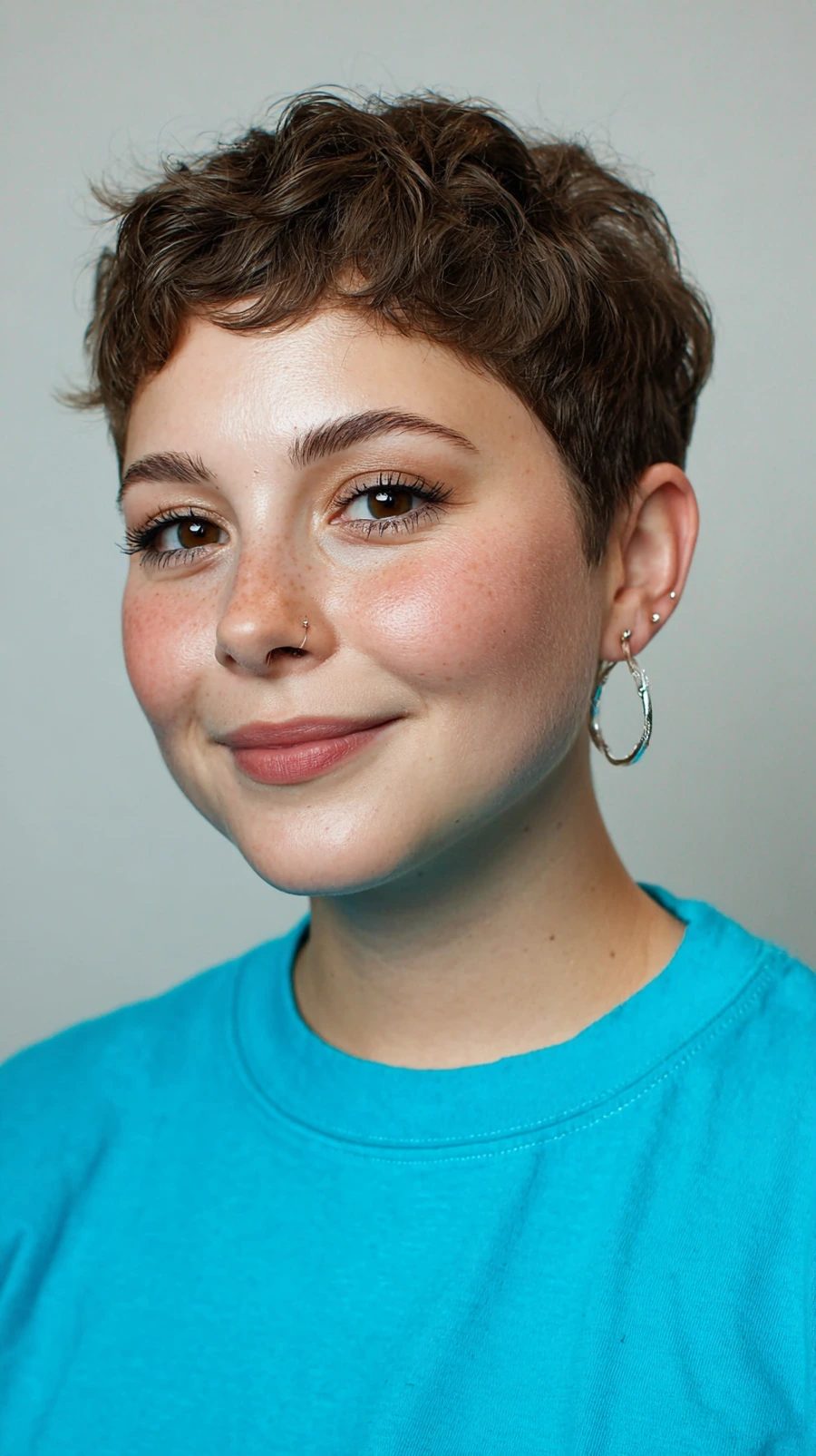
A short textured pixie is the boldest way to make fine hair look full, because short layers stack on each other and create height that long hair cannot hold. The photo shows a close crop with a tousled, textured top that gives the crown real presence. It is a cut that relies on texture rather than length, so it works best when you are happy to style it for a few minutes each morning.
Work a pea sized amount of matte paste through the top while the hair is damp, then lift small sections upward as you dry. For straight hair, the same cut with a little backcombing at the crown gives a similar lift. The payoff is a wash and go shape that never falls flat by midday.
6. A Shoulder Length Cut With Face Framing Layers
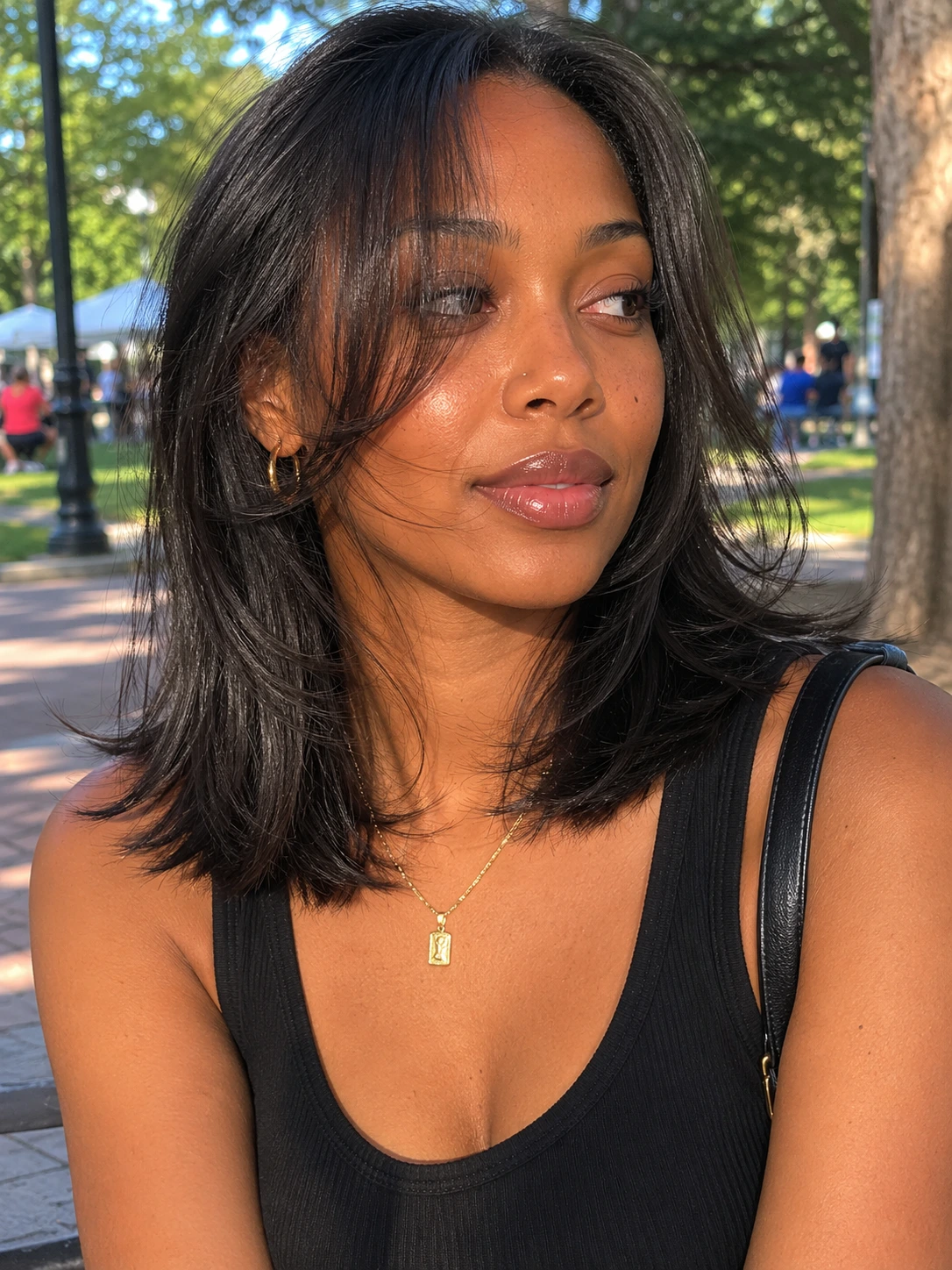
Face framing layers are a quiet fix for thin hair, because they add shape exactly where the eye looks first. In the outdoor photo, dark shoulder length hair falls in soft pieces around the cheekbones and jaw, so the cut looks intentional from the front even though the back stays simple. The length sits at the shoulders, which is short enough to hold volume and long enough to tie back on busy days.
Blow dry the front pieces forward and then flick them back with a round brush for a soft bend. Avoid heavy oils near the face, since they make fine front pieces look greasy by afternoon. A dry shampoo at the roots on day two keeps the framing pieces light and separated.
Long hair with no framing, falling in one flat sheet past the shoulders.
The same length with face framing layers, shape around the face and visible movement.
7. The Soft Scandi Bob With Airy Ends

The Scandi bob is a relaxed, slightly undone bob that looks modern without trying hard. In the photo, a chin length bob with airy, textured ends sits softly around the face, worn with a striped knit that keeps the whole look simple. The ends are not razor sharp, which stops fine hair from looking thin at the hem. It is a cut that suits straight hair well, since the shape itself does the work.
Let it air dry with a little salt spray for texture, or smooth it with a flat iron for a neater day. The cut grows out into a soft lob, so you can stretch the time between appointments. Ask for textured ends rather than a hard blunt line if your hair is very fine.
8. Long Layers With Feathered, Airy Ends
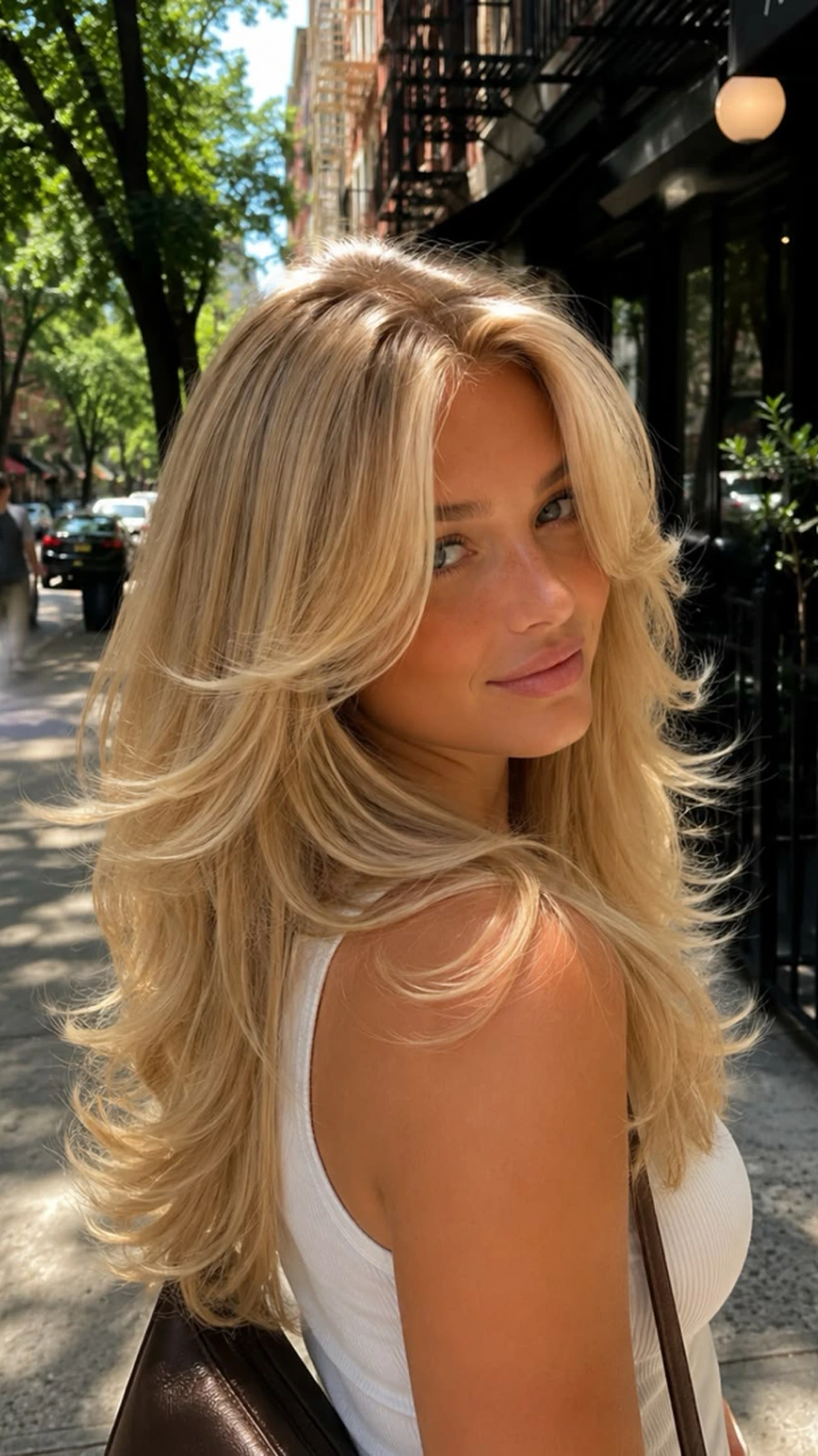
Long layers with feathered ends keep length while fixing the flat, heavy feeling that long thin hair often has. The street photo shows blonde hair with long, airy layers that lift away from the face and end in soft, feathered points. Because the shortest layers sit high, the top of the hair gains movement while the overall length stays long. It is a strong choice when you do not want to cut much off.
Blow dry with a large round brush, rolling the ends outward for a feathered flick. A light leave in conditioner on the ends only keeps them soft without weighing the roots down. Sleep with the hair loosely braided if you want gentle waves by morning.
Ask for long layers that start near the cheekbones.
Roll the ends outward with a large round brush.
Cut short layers all over, which thins the ends.
Use heavy conditioner at the roots.
9. A Long Pixie With a Side Swept Fringe

A long pixie with a side swept fringe gives fine hair the best of both worlds: short, light layers at the back and enough length on top to sweep across the forehead. In the garden photo, the blonde crop sits close at the sides while the longer top sweeps softly to one side, creating width and height at the crown. The fringe draws attention to the eyes and keeps the cut feeling soft rather than severe.
Blow dry the top forward and to the side with a small round brush, lifting at the roots as you go. A light wax on the fringe pieces keeps them in place without stiffness. This cut needs a trim every four to five weeks to keep the nape neat.
The longer top sweeps across the forehead while short layers at the back keep the shape light, so fine hair gains height exactly where it needs it.
10. The A Line Bob That Builds Shape at the Back
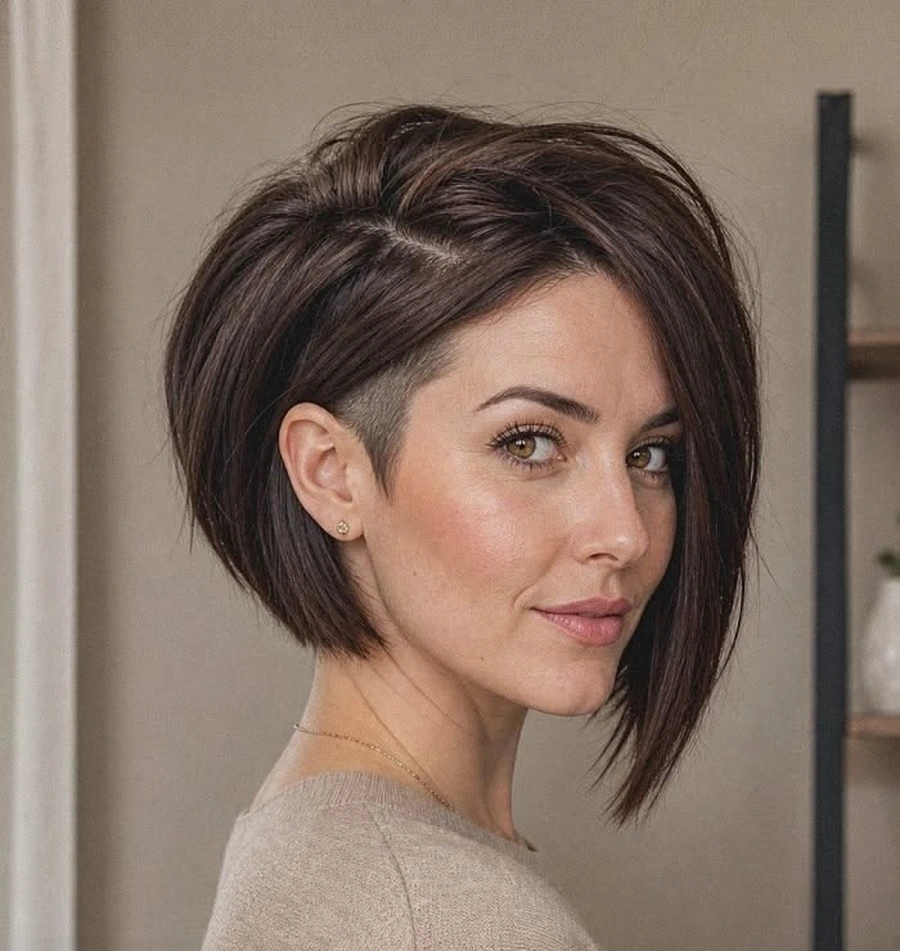
An A line bob builds its volume at the back and lets the front do the talking. The photo shows a dark bob that is stacked and full behind the ear, then angles longer toward the face, with a neat undercut section keeping the nape tidy. That stacked back is what makes thin hair look thick, since the layers pile up instead of lying flat. The longer front keeps the cut elegant rather than boxy.
Blow dry the back with a round brush, lifting each section upward to keep the stacked shape. A smoothing cream on the front pieces keeps the angle sleek. This cut suits straight hair especially well, since the angle shows clearly when the hair is smooth.
📌 Good To Know
The stacked back needs regular trims to hold its shape. Book every five to six weeks, or the back will grow out and lose its lift.
11. Wispy Bangs Over a Collarbone Cut
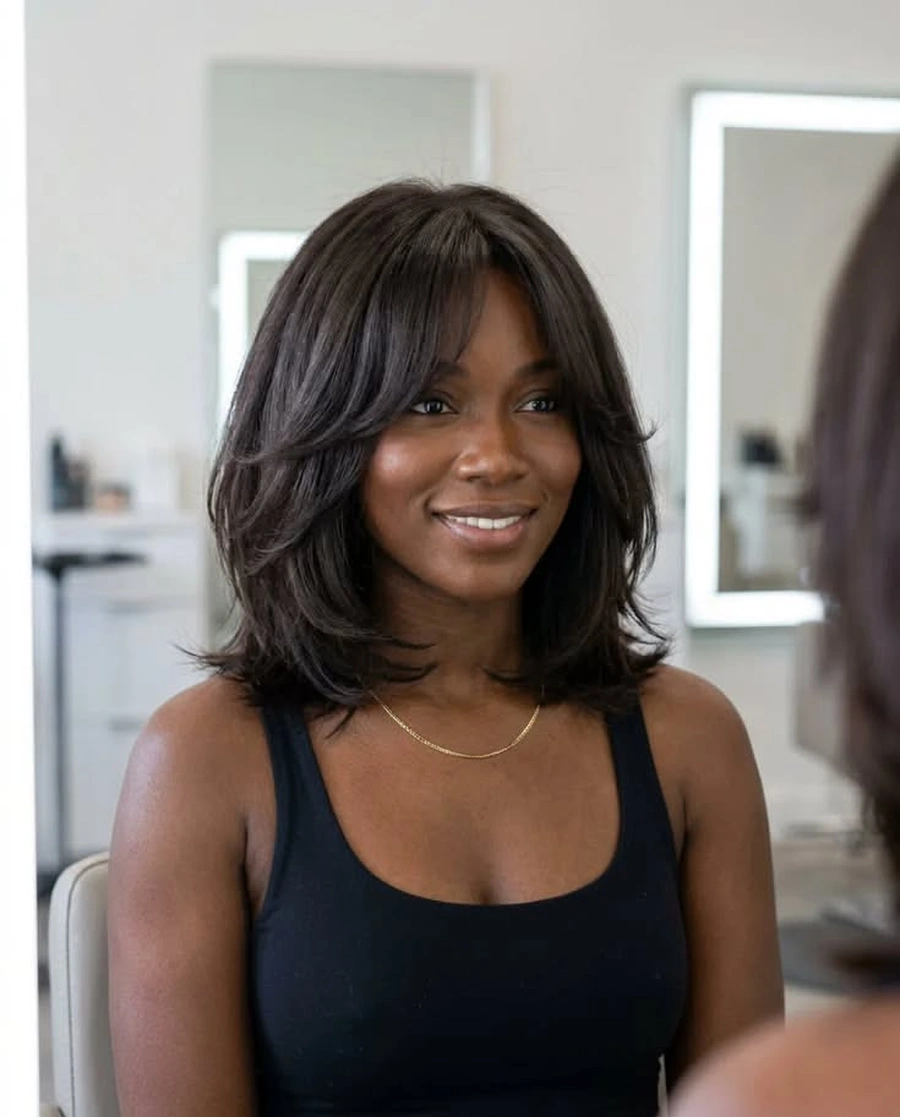
Wispy bangs soften a collarbone cut and stop it from looking heavy around the face. In the salon photo, a light fringe sits across the forehead while shoulder length layers fall in soft, flicked ends. The wispy texture matters for thin hair, since a thick, heavy fringe can eat up too much hair and make the rest look thinner. Here the fringe is airy enough to add style without taking volume from anywhere else.
Trim wispy bangs at home only if you are confident, since a small slip shows fast on a light fringe. Blow dry the fringe forward with a small brush, then part it lightly with your fingers. A touch of dry shampoo keeps a wispy fringe fresh between washes.
💡 Quick Tip
Keep wispy bangs light. A fringe that is too thick takes hair from the crown and can make the rest of the cut look thinner.
12. A Layered Midi Cut With a Deep Side Part
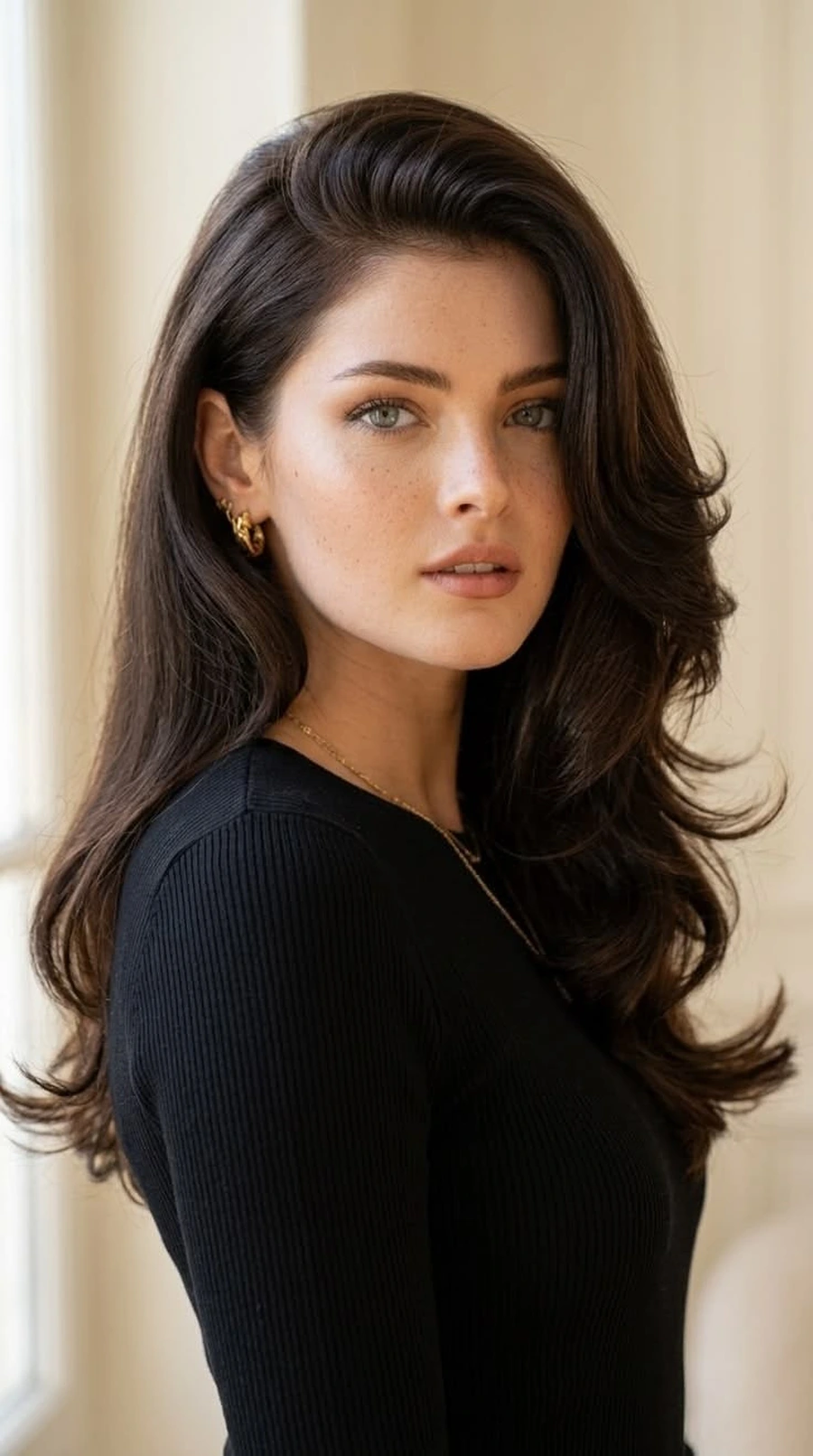
A deep side part is the fastest volume trick in this whole list, and it works best with a layered midi cut. The photo shows dark hair swept heavily to one side, with long layers falling in soft waves that give the fuller side real presence. Moving the part off centre forces the roots to lift, since the hair is no longer trained to lie flat in its usual place. It is a styling change you can test today, before any cut at all.
Flip the part to the opposite side while the hair is damp, then blow dry the roots in the new direction. A root powder at the part adds grip for fine hair. If the part keeps slipping back, a small clip while the hair dries trains it into place.
Recreate this look
13. The Bixie Cut Between a Bob and a Pixie

The bixie sits between a bob and a pixie, and that in between length is exactly why it suits thin hair. The photo shows a soft, short crop with longer pieces around the face and a textured crown, giving the fullness of a bob with the lightness of a pixie. It is shorter than a bob, so it holds its shape all day, but it keeps enough length on top to style in different directions.
Style it with a little texturizing powder at the crown for grip, then arrange the top pieces with your fingers rather than a brush. A brush can flatten the texture that makes this cut work. Ask your stylist to keep the nape soft, not shaved, for an easier grow out.
Keep length on top for styling options.
Add texturizing powder at the crown.
Arrange the top with fingers, not a brush.
Keep the nape soft for an easy grow out.
14. Soft Internal Layers for Long Thin Hair
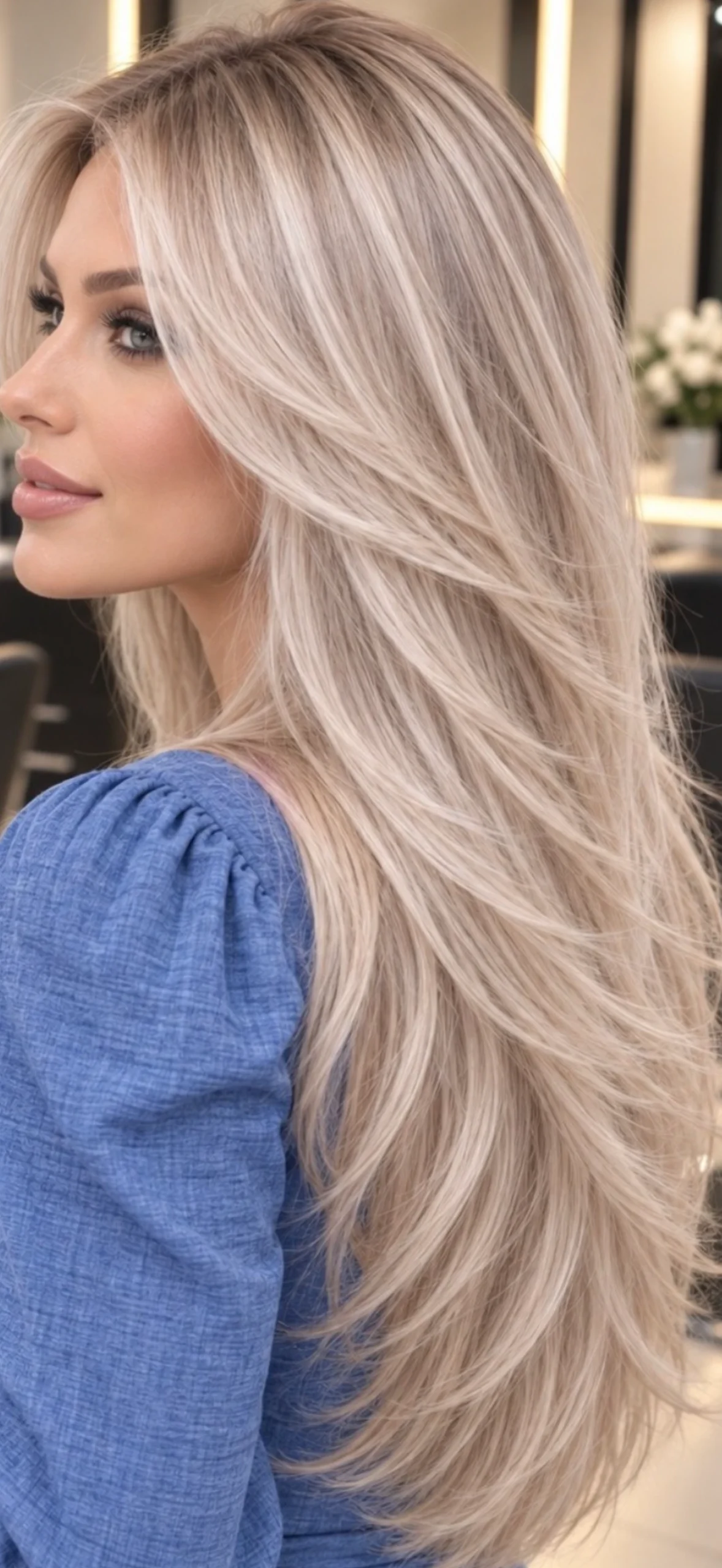
Internal layers are the hidden version of layering, and they are made for long thin hair. The side profile photo shows platinum hair that looks long and smooth on the surface, with shorter layers tucked underneath that push the top layers outward. Because the layers are hidden inside, the ends stay full and the outline stays clean. It is the right call when you love long hair but hate how flat it can look.
Ask specifically for internal or invisible layers, since a standard layered cut thins the ends more. Blow dry the hair in sections, lifting at the roots, and the internal layers will do the rest. A gloss treatment now and then keeps long fine hair looking healthy and shiny.
| Internal layers | Visible layers |
|---|---|
| Length and ends stay full | More obvious movement |
| Volume comes from underneath | Ends can look thinner |
15. A Chin Length Bob With a Curved, Rounded Shape
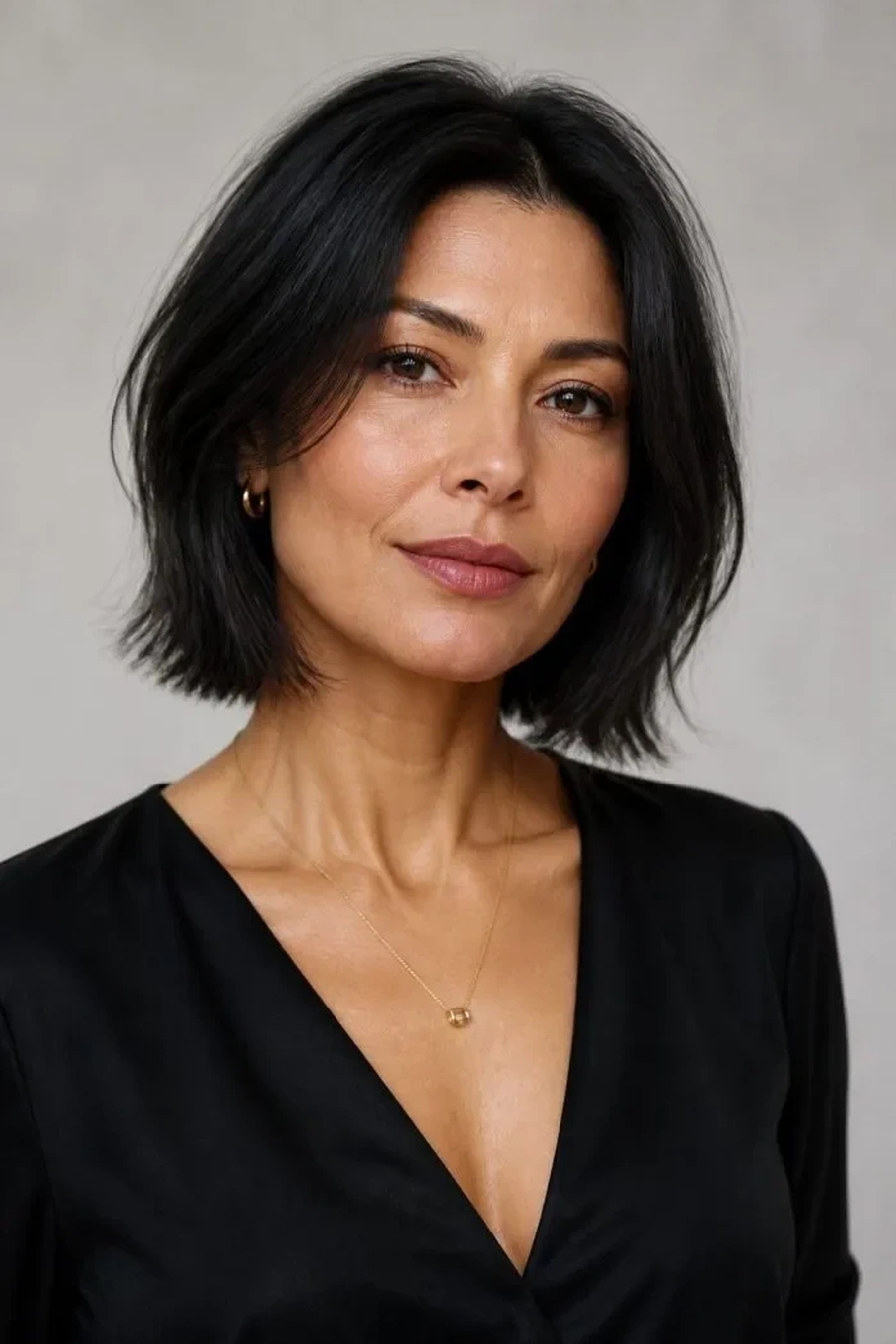
A chin length bob with a curved, rounded shape gives thin hair a soft, full outline. The photo shows a sleek black bob that curves gently under at the ends, sitting neatly at the chin with a clean middle part. The curve is the key detail, since ends that turn under look thicker than ends that hang straight. It is a polished cut that suits straight hair and needs very little styling to look finished.
Blow dry with a round brush, turning the ends under as you go. A flat iron can do the same job in minutes on second day hair. Keep the part in the middle for symmetry, or move it slightly to one side for a little extra root lift.
- ▸Blow dry ends under with a round brush.
- ▸Keep the length right at the chin.
- ▸Use a middle part for a clean outline.
- ▸Refresh the curve with a flat iron on day two.
16. Feathered Layers With a Middle Part
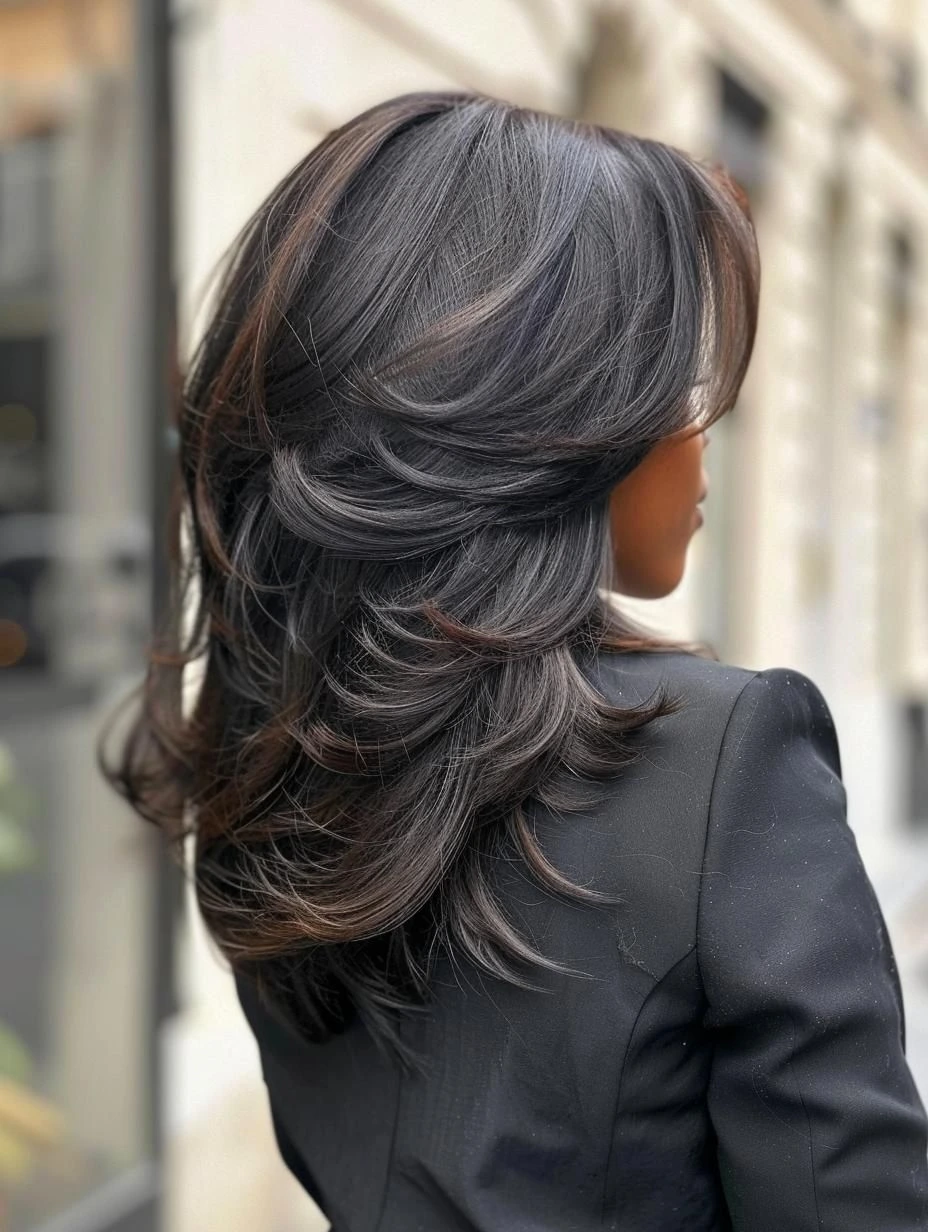
Feathered layers with a middle part show how much movement a back view can hide. The photo, taken from behind, shows dark hair falling in soft, feathered layers that flick outward at different lengths, giving the whole head a full, airy shape. The middle part keeps the cut balanced, while the feathering stops the hair from forming one heavy curtain. It is a cut that looks just as good from behind as from the front.
Blow dry in sections with a round brush, flicking alternate sections outward. A light texturizing spray through the mid lengths helps the feathered pieces stay separated. This cut works well for hair that is fine but plentiful, since the feathering shows off the texture.
17. The Bouncy Blowout Bob
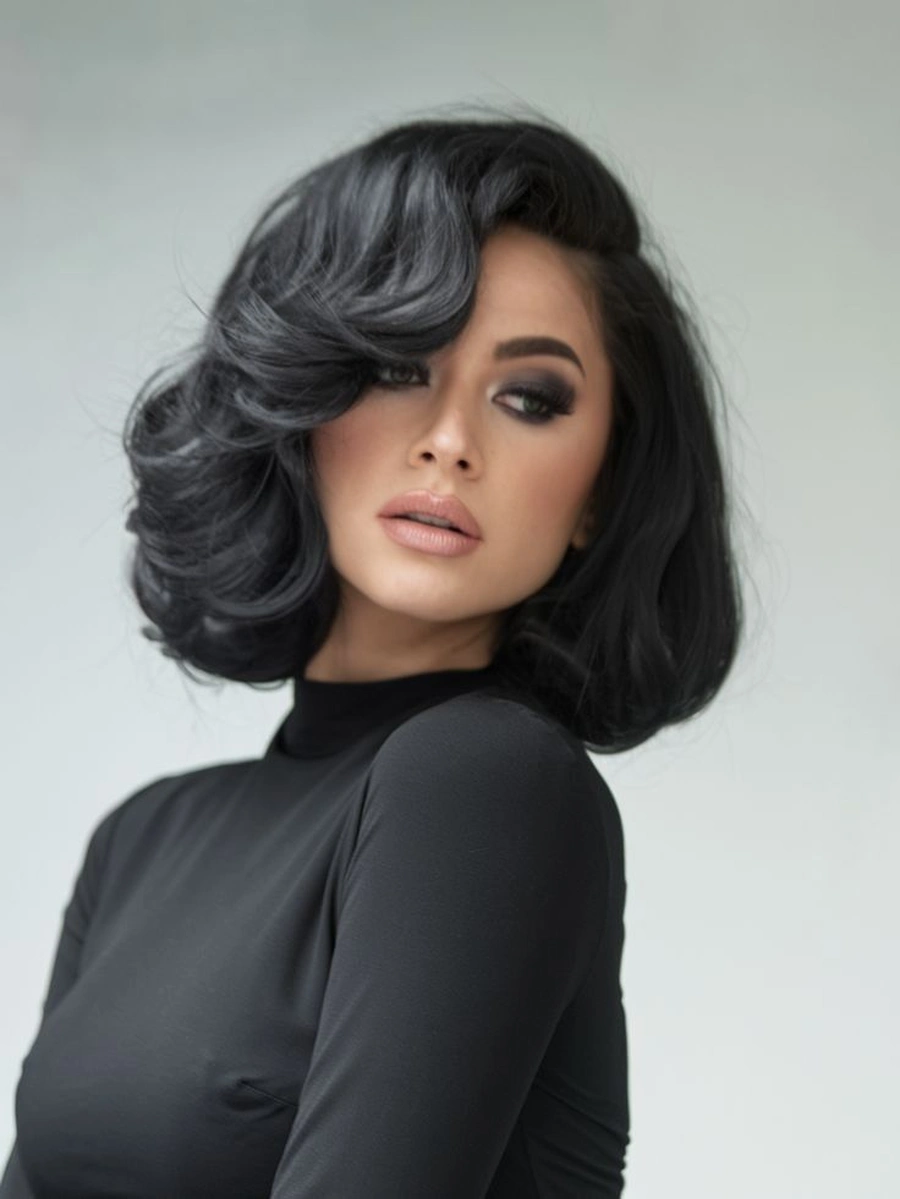
A bouncy blowout bob is less about the cut and more about the finish, which is good news for thin hair. The photo shows a dark bob styled into large, rounded waves with real height at the crown and a full, curved outline. The cut underneath is a simple bob, but the blow dry gives it the volume that straight, air dried hair rarely has on its own. It is the cut to choose when you enjoy styling and want a polished result.
Blow dry with a large round brush, rolling each section up and away from the face, then pin the curls to cool for extra hold. A volumizing spray at the roots before drying makes the lift last longer. On busy days, large rollers on damp hair give a similar bounce with less effort.
The same bob air dried, smooth but flat against the head.
The same bob blown out with a round brush, rounded, lifted, and full of bounce.
18. A Shag Haircut With Short Crown Layers
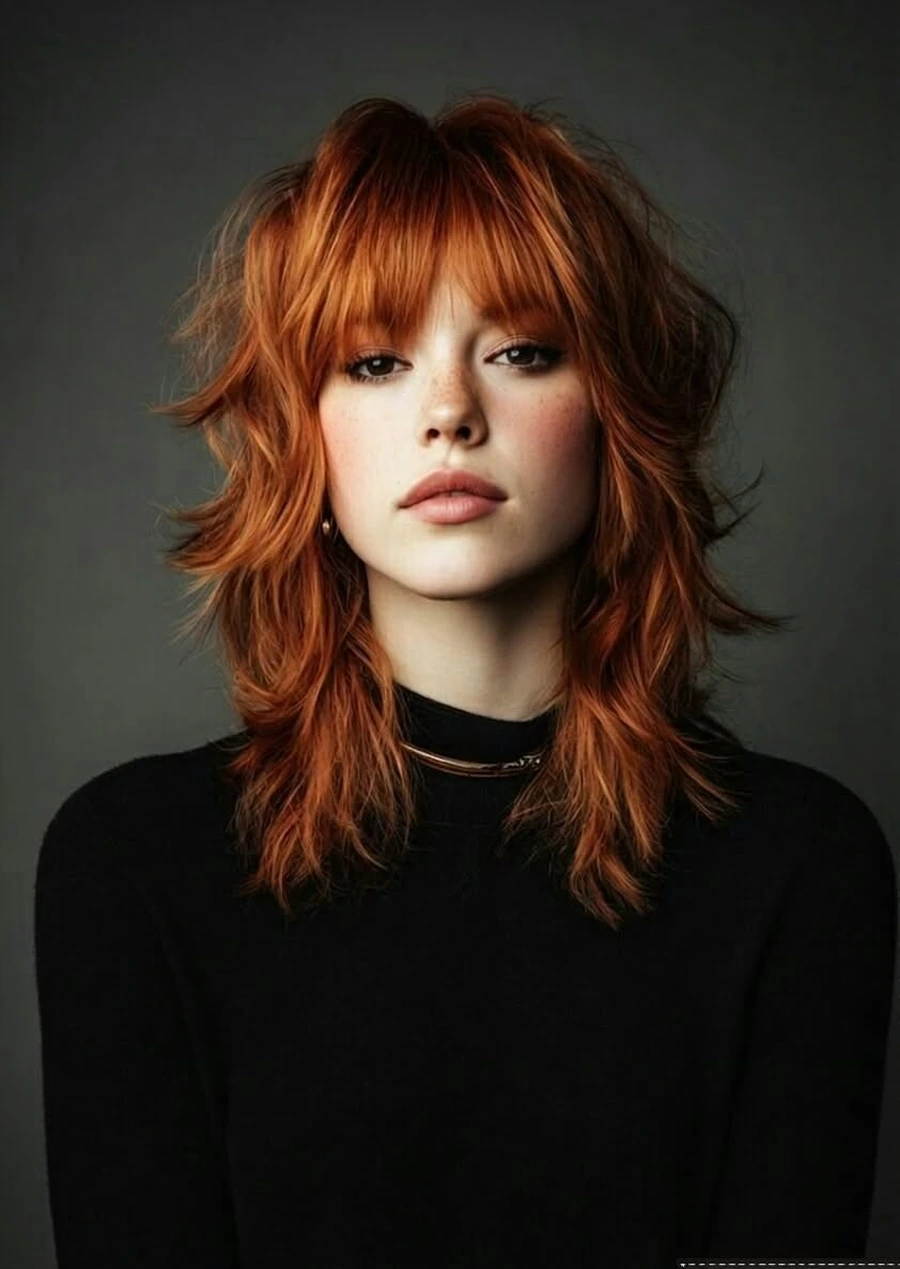
A shag with short crown layers puts the volume right where thin hair loses it first. The photo shows a copper shag with a full fringe and short, choppy layers at the crown that fall into longer, textured pieces around the shoulders. The short crown layers create height that longer hair cannot hold, while the shaggy ends keep the cut feeling relaxed. It is a confident cut that suits straight hair with a little natural texture.
Scrunch texturizing spray into damp hair and let it dry naturally for the shaggiest finish. For a neater day, smooth the fringe with a flat iron and leave the ends textured. The fringe needs trimming every three weeks to stay out of the eyes.
19. The Sleek Lob With Blunt Ends and Lifted Roots
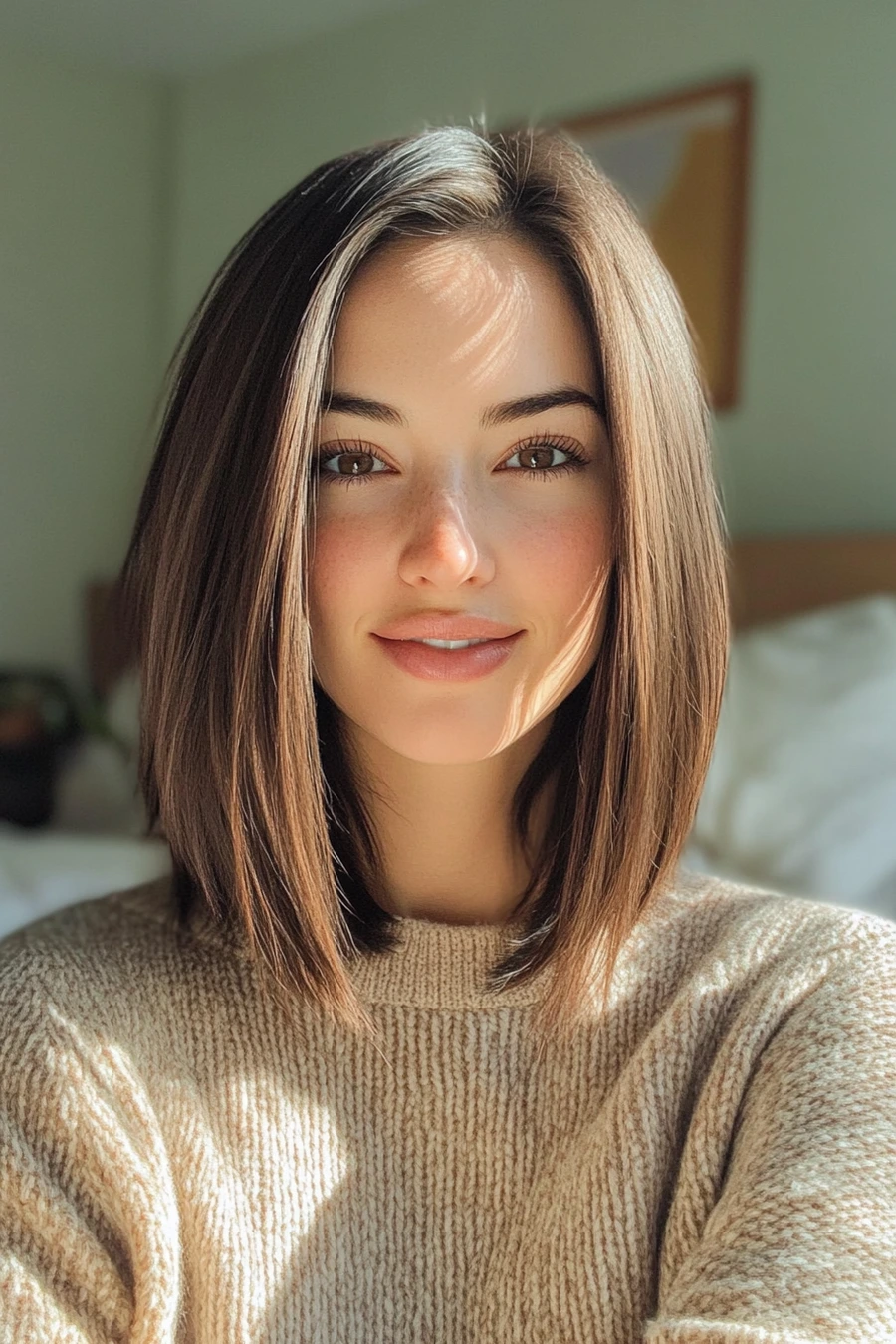
A sleek lob with lifted roots proves that straight hair does not have to mean flat hair. The photo shows a smooth brown lob that falls past the chin, with the roots lifted just enough to give the top some shape. The ends are clean and even, so the hair looks healthy, while the root lift stops the whole cut from sitting close to the scalp. It is a low fuss cut that looks polished with minimal effort.
Blow dry the roots upward with a paddle brush, then smooth the lengths with a flat iron if needed. A root lift spray applied to damp roots holds the lift through the day. Avoid heavy serums near the scalp, since they flatten the very lift this cut relies on.
Lift the roots upward while blow drying.
Use root spray on damp hair for lasting lift.
Apply heavy serum at the scalp.
Let the hair air dry flat against the head.
20. Feathered Layers With a Curtain Fringe for Fine Hair Over 40

Feathered layers with a soft curtain fringe are a kind choice for fine hair over 40, because they add movement without demanding a drastic cut. The photo shows a woman with layered, feathered hair that falls past the shoulders, with soft fringe pieces opening around the face. The layers give the hair body, the fringe softens the forehead, and the overall length stays flattering and easy to manage.
Blow dry the fringe away from the face and the layers outward for a feathered finish. A lightweight mousse through the lengths adds body without stiffness. This is a cut that grows out well, so it suits anyone who prefers longer gaps between salon visits.
Soft feathered layers and a curtain fringe add body and movement without a drastic cut, which is why this shape works so well for fine hair.
More Style Ideas You May Like
If you enjoyed these haircut ideas, these published guides offer more styling inspiration to browse next.
- 27 Classy Fall Outfits for Women Over 40 That Look Expensive Without Trying Too Hard
- 25 Cozy Fall Outfits for Women Over 60 That Feel Warm, Easy, and Beautifully Put Together
- 21 Petite Fall Outfits That Make a Small Frame Look Taller Instantly
- 25 Apple Shape Outfits That Look Perfectly Balanced
- 22 Fall Outfits for Black Women That Feel Rich, Warm, and Easy to Wear
Not sure which shapes suit you best? Try the Body Shape Calculator to get a clearer starting point before your next salon visit.
The best cut for thin straight hair is the one that gives you lift without adding work to your morning. Look back through these 20 ideas and notice which shapes keep catching your eye, then take two or three photos to your next appointment and talk them through with your stylist. A good stylist will adjust the length and layers to your face and your routine, so the cut works in real life, not just in the salon chair. Save this list on Pinterest so you have it ready when booking time comes, and share it with a friend whose hair falls flat too.